
THE GOAT, THE WELL AND THE WOUND


A Fellowship Interlude from The Gentle Third Craft ·
The Missing Chamber
Some chapters are lost to fire. Others disappear because a book changes its shape. I came to this one by listening. In the voice of an older telling of The Sword in the Stone, there was a chamber I could not find in the printed copy I held: a witch in the wood, boys confined in hutches, a goat nearby, a learned book, and Merlin summoned into danger. I had expected a story about enchantment. What I heard was a story about restraint.
Madame Mim was there in all her theatrical power, able to change forms and command the scene. Yet it was not the spectacle that stayed with me. It was the smallness of those waiting to be released, and the possibility that the least impressive creature might carry the necessary message.
The absence of that episode from my own book was an ordinary matter of different versions, not proof of concealment. But its return through sound met something in my life that had no easy language. I recognised a wound: the ache of loving people whom you cannot simply reach, the fear of being misunderstood, and the temptation to make your hurt the whole story.
This is a literary reading of that meeting between an old story and a living feeling. It is not a judgement upon any person. No living woman is the Witch. No child is a figure placed here to carry an adult's accusation. The children are children first, beyond any metaphor that tries to claim them. The story has a different task: to ask what remains of love when the door will not open.
I — The False Bower
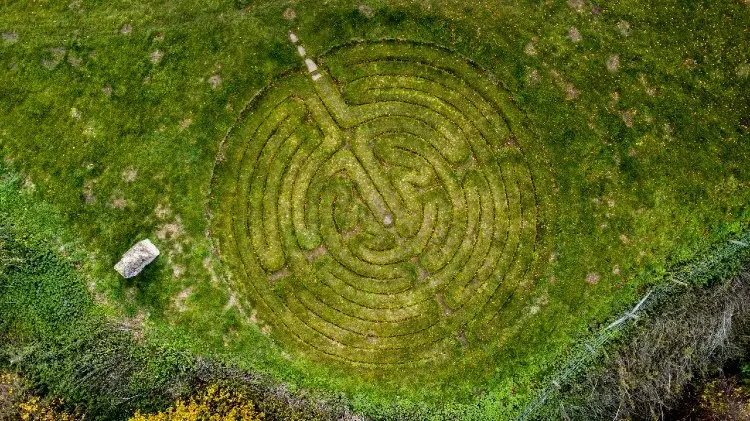
At Alkborough, Julian's Bower curls inward through its patient turns. The traveller chooses to enter. The path may confuse the feet, but it does not deny them their freedom. Every bend offers the possibility of learning how to walk without insisting upon a straight road.
The hutches in the old witch-story make a darker shape. They are enclosures without consent. One must wait inside while another voice decides the terms. In a true bower the traveller is humbled by a path. In a false bower someone is diminished by a gate.
That difference matters to a wounded father. A winding road can teach patience; an imposed distance can feel like erasure. The heart wants to rush forward, explain everything, put its hands against the timber and pull it apart. Yet a broken door is not the same thing as a safe home. Love is not made truer by becoming frightening.
So the first teaching is not how to defeat an enemy. It is how to recognise the difference between being delayed and being destroyed, between a door that is closed today and the love that can still be carried to it tomorrow. The Bower asks the walker to endure the turning. The false bower tests whether he can endure without forgetting his gentleness.
II — The Boys Before the Symbols
The boys in the hutches must be seen before the witch, before the wizard, before the book of spells. They are the human centre of the scene, and they cannot be made into a prize to be won by either side of a contest.
A child may hear a hundred stories about the adults around him. He is not obliged to become the keeper of any of them. He should be free to love, doubt, speak, remain quiet, ask again, change his mind and grow. The work of a caring adult is to leave room for that freedom, even when waiting hurts.
I know something of the pain of a threshold. You can stand on one side of it with a heart full of words and discover that the words are not yours to force through. You may feel that every silence is telling a story about you. Some silences are simply silences. The sorrow is real without giving the wounded person permission to decide what everyone else thinks.
Here the old heroic instinct has to change. It would rather ride in, break the lock and call the noise a rescue. But rescue without regard for the rescued becomes another kind of possession. The father's first duty is not to be recognised as the hero. It is to keep the space beyond the door as safe as he can.
The boys are not symbols first. The wound matters because they do. Everything else in this scroll must answer to that order.
III — When the Well Was Questioned
There is a well in the landscape of the Craft. Water gathers beneath stone, unseen until someone comes close enough to look. A well asks for quiet. You cannot hurry its depth, and you cannot improve its reflection by striking the surface.
I had learned to return to such places when the world grew loud: a spring, a tree, an open field, the shifting light among clouds. Faces sometimes appear in clouds, as faces do in weather, bark and shadow. Imagination recognises shapes. Grief gives some shapes unusual weight. Neither fact turns a vision into an instruction or an image into proof.
When ordinary things you cherish are interpreted differently by somebody else, the feeling can be strangely intimate. It is as though the source itself is being questioned: not just what you have done, but how you see. That is a painful place from which to write. It would be easy to call the disagreement blindness, malice or enchantment and make the well a weapon.
But water will not serve that purpose for long. Its better lesson is to remain clear. The field can be a witness to what I felt; it cannot testify to another person's motives. A cloud is a cloud. The well is a well. Their meaning in my story does not make them evidence about somebody else's life.
The water asks for a more difficult courage: to keep seeing beauty without demanding that everyone interpret it as you do, and to keep offering care without requiring the world to applaud the offering.
IV — The Tree Without a Verdict
Somewhere in the wider journey, marks were found on a tree. Letters stood beside other letters. The moment held a private force because a name, a memory and a difficult season seemed suddenly to touch.
A mark in wood is a physical thing. Its maker, date and meaning may be entirely unknown. The feeling that arrived when I saw it is another kind of thing. Both can be recorded, but they must not be mistaken for each other. A carved initial cannot identify the intention of a stranger. A tree cannot pass a verdict upon a family.
John Dee had long stood in the historical chambers of this work, at the meeting place of mathematics, navigation, books and contested forms of knowledge. A sound or pair of letters can call his name to mind. That association may be fruitful in a poem. It is not a message he arranged centuries ago for my private life.
The temptation of a wounded mind is to gather every resemblance into a single answer. The gentler craft asks what we are actually holding. Wood. Letters. An encounter. A feeling. A question. None is dishonoured by being given its proper name.
So the private name remains private. The tree enters the story not to point at someone, but to show a turning in the seeker. He looks at the carving, feels its force, and leaves the living people outside it. That is one way a sign can become a lesson instead of a snare.
V — The Goat in the Next Cage
Beside the grand creatures of romance stands a goat. No crown, no sword, no dragon's fire: only the awkward, overlooked neighbour in the next cage. In the remembered episode, the goat becomes the bearer of a message that can reach help.
This is the figure I would save if all the other marvels were stripped away. The goat cannot defeat the witch by becoming bigger than she is. It cannot command the scene. It has a narrower gift: it remains near, notices who else is confined and carries word beyond the enclosure.
There are times when love must accept such a humble shape. It may be a letter written without accusation, a promise kept without an audience, a door left open without demanding anyone walk through it. It may be the discipline of telling the truth only as far as you know it, refusing to fill the silence with claims that cannot be tested.
The goat is sometimes the creature on which a community places its blame. Here that lowly figure is transformed, not into a conqueror, but into a messenger. To be made small is not the same as to be made useless. A voice does not need to roar to carry care.
I imagine the goat waiting close enough to hear, patient enough to be trusted with what matters. It carries no verdict about the witch. It carries news of those who need help. That is the distinction the father must learn.
The first duty is not to escape alone. The first duty is not to win the argument. It is to remember the other person, to keep the message clean, and to refuse to abandon those who cannot yet hear it.
VI — The Witch and the Book
Madame Mim's magic is memorable because it fills the room. Every form is possible. Every change demands attention. She is an image of power delighted by its own performance.
A book can acquire the same appetite. It can gather names and signs until every page seems to accuse somebody. It can turn a personal wound into an elaborate machine that makes the reader certain before the evidence has spoken. That is the danger of enchantment inside scholarship: the pleasure of a pattern becoming stronger than the duty to examine it.
This Craft began with questions about land, history, family, manuscripts and the duties of a custodian. Its books must remain doors into inquiry, not hutches that imprison the people named within them. A surname is not a confession. A resemblance is not an inheritance. A powerful metaphor is not a judgement about a living person.
The old witch can remain exactly where literature placed her. She does not need a modern face. The more earnestly the wounded reader tries to give her one, the less room remains for the actual human beings whose freedom matters.
Merlin's deeper magic is therefore an art of distinction. He need not deny that stories carry meaning. He has to recognise the point at which meaning stops and the desire to control another person's story begins. The Fellowship worth keeping is not a company of people who possess secret answers. It is a company capable of carrying questions without sacrificing mercy.
VII — Three Changes
The old scene moves through changes of form. That is the attraction of the magical contest: each new shape promises an advantage, and each advantage invites a still greater display. The audience waits to see who can become most formidable.
Human sorrow changes form too. First comes shock. A familiar room seems altered, and the mind reaches for an explanation large enough to account for the hurt. Then comes the long middle: waiting, remembering, replaying words, drafting replies never sent, wondering whether one more effort will force the door to move.
The third change is less visible. It comes when the wounded person asks what shape he wishes to become. Must he be louder? More certain? Harder to wound? Or can he remain recognisable: a father, a reader, a keeper of records, a man capable of tenderness after a difficult day?
These are three movements of feeling, not a coded account of any proceedings or an equation with a magical duel. Their value lies in the choice they illuminate. A wound can change the form of a life without being permitted to choose its character.
The greatest change is not into a dragon. It is into someone who can be precise when precision is needed, gentle when gentleness costs something, and silent when speaking would only spread the hurt.
VIII — Merlin's Smaller Victory
In the tale, Merlin belongs to the rescue, but the lesson I take from him is not the pleasure of watching a stronger magician win. It is his attention to what the message requires.
He does not need to become the story's new jailer. Wisdom that frees one person only to claim ownership of the next has not broken the spell. The measure of help is whether those who were confined are given back a little more of their own future.
That is a demanding lesson for the keeper of a story. The author has all the power on the page. He can decide who speaks, who is mocked, who is beautiful, who is wicked, who receives the final word. The truest use of that power may be to refuse a tempting certainty. To leave a private name unwritten. To say that a feeling was real without claiming it proved an intention. To make the child larger than the conflict.
Perhaps that is why the goat matters more than the wizard. The wizard may know how to open a cage; the messenger remembered there were lives inside it. One brought skill. The other brought attention. Together they describe a quieter form of courage, where the purpose of power is not to dominate but to release.
IX — The Water Returned
I would like to end with every door open. That would make a handsome romance, but it would not be truthful to the wound. Some doors remain difficult. Some conversations do not happen when we hope. Love can continue without possessing an ending.
So I return to the well. Beneath the argument, beneath names carved into bark and the changing faces of clouds, the water has been gathering all along. It does not ask me to win. It asks me not to poison what I carry.
The Beast had taught the seeker to stop chasing. The Witch taught him to notice the temptation to become cruel when confined. The tree taught him that a mark and a meaning are not the same thing. Merlin taught him to use what he knew without making it a weapon. And the goat taught him to remain close enough to send word.
Not every message brings an answer. It is still worth sending with care. Not every wound closes. It can still be kept from becoming a weapon. The children of the living world must be allowed their own voices, their own time and their own meanings, far beyond the claims of a book.
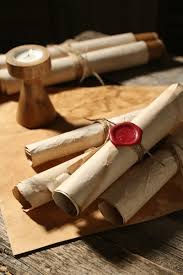
The first duty was not escape. It was faithful witness. The goat did not win by power; it carried the message. The well was questioned, but not abandoned. And somewhere beyond the hutches, beyond the performance and the spell, there remained the possibility of an open door.

Comments