
THE ISLAND BEFORE THE TOMB

Updated: 3 days ago

Before a tomb acquired a name, an island already lived in the story. Before we can identify the island, we must learn to read the land—and the people who carried its words.
1. The walk came before the archive
The first clue was not a manuscript. It was a walk through trees above the Humber, where the old ground descends towards the water and the village appears to hold its history in separate, stubborn pieces: a church, a well, an earthwork, a maze, a river and the wooded slopes between them.
The landscape soon began to offer a second way of reading. Across Alkborough and the wider Lindsey country are things a reader of Arthur would recognise: a dragon held in stone; a churchyard stone marked by blades; a spring emerging from the hillside; a single winding path; and a remembered woman associated with a hall and a hollow. Each has its own date, material and testimony. Their arrangement is not a recovered medieval map of Camelot. It is a landscape in which the questions of Arthurian story can be walked: what guards the land, who may take the sword, where healing is found, whose name is remembered, and who follows the path?
In 2025, I encountered carvings on trees along the woodland route around Alkborough. Five stood out to me among many other marked surfaces. I photographed them, returned to the ground and began asking why particular names and shapes had caught my eye. The first encounter belongs to my own recollection; photographs from May 2025 supply separate dated records of later visits.
The marks stand on living trees; their makers and dates remain open questions. Their importance in this account begins with the search they set in motion.
Only afterwards did family investigation lead me to Stephen Slaney. And only afterwards did the documentary record return that name—written Slanye—to Awkborough, with land and a fishery on the Humber in 1568–69.
That sequence must be preserved. The walk came before the archive. The archive made the place newly legible. The old deed is independent historical evidence; the trees are the modern beginning of the quest. Neither needs to be forced to masquerade as the other.
This is where a historical inquiry can begin without asking a personal encounter to serve as a document from antiquity. The carvings are witnessed in the present, the records survive from the past, and the space between them is the story to investigate.
At Alkborough, the ground rises above one of the most consequential meetings of water in England. The Trent arrives from the south. The Ouse comes from the west. Beyond their meeting lies the Humber, the broad passage to the North Sea.
From the bluff the country appears both open and enclosed. There are distant banks and low islands of silt, fields that were once wetter, channels that have moved, and high ground reaching south through Lindsey. Julian's Bower rests close to the edge. Countess Close is beside it. The church, the old well and the wooded slopes are within a landscape small enough to walk yet deep enough to occupy a lifetime of questions.
There is a question beneath the larger Arthurian question. Why has this river headland accumulated such an unusually dense mixture of paths, property, story, and remembered names? Before it can be compared with Avalon, the place deserves to be read on its own terms.
2. Ground that could be called an island
Long before a written history named the Humber, people were working and crossing these waters. The North Ferriby sewn-plank boats demonstrate formidable Bronze Age skill on the estuary. The Appleby logboat and the Brigg boat broaden that history into the south-Humber waterways. Around Alkborough itself, the archaeological record includes worked flint, a stone axehead associated in local records with Kell Well, material at Walcot, and prehistoric finds from the Whitton Road and Countess Close landscape. These are distinct finds, gathered from distinct contexts; together they show that the high ground and its approaches had a human past long before medieval manor houses or Arthurian literature.
Kell Well: the water under the hill. A little way along the scarp, towards Walcot, water comes out of the rock. The spring is a physical fact, fed by the geology of the hillside, and its name is commonly connected with keld, an old northern word for a spring. It belongs in the centre of the Alkborough account, because the village cannot be understood as church, maze and manor alone. Water moves through the same ground, down towards the Trent and Humber. The well connects the high path to the hidden interior of the hill.
Abraham de la Pryme visited Kell Well in 1697 and recorded small star-like stones collected there, locally called kestles and postles. They were the fossil remains of crinoids, not carved Christian relics; the remarkable thing is that a natural object acquired a memorable local name. Later descriptions speak of the spring as petrifying, and local accounts associate its water with wishes and remaining in the village. Those traditions have dates of their own. Archaeological finds reported near the spring, including a stone axehead and flints, also place human activity in this neighbourhood long before the known medieval maze. Their precise find contexts deserve care.
A reader of the Grail romances will recognise water as more than scenery. Arthurian narratives return to springs, lakes, wounds, healing and the question of who can approach or restore a damaged kingdom. In the French romances, the Lady of the Lake and the sword Excalibur belong to that imaginative world; in Geoffrey's Life of Merlin, Arthur is carried to an island where Morgen may heal him. Kell Well offers an actual spring beneath the Alkborough headland, a place where such images can be considered against lived topography. No medieval witness yet identifies Kell Well as Arthur's healing water. Its contribution is to make the landscape's relationship between stone, water and memory visible rather than merely poetic.
The river was a means of passage, not merely a boundary. Its banks shifted; its usefulness endured.
This matters because the modern landscape can play tricks upon the historical imagination. To look at the tidal wetland today and paint the same expanse blue on a map of AD 500 would be to mistake one moment for another.
At Alkborough Flats, an archaeological and sedimentological investigation recorded thirty boreholes across four transects, examining peat, mineral sediment, pollen and radiocarbon evidence. The published local dates readily available from that work reach deep into prehistory. A reported organic horizon near borehole 17 belongs around 2130–1890 cal BC, at approximately 2.22–2.26 metres below Ordnance Datum. It is precious evidence of ancient water and sediment; it is not a measured coastline from Arthur's supposed century.
A wider geological reconstruction by Geoff Gaunt, prepared for the Flixborough excavations volume, gives the estuary greater depth. The western scarp between Walcot and Burton upon Stather has constrained the Trent's course. The alluvial formation of Alkborough Flats may have endured in varying form for roughly two thousand years or longer. Yet parts of that surface could at different times have been bank, dry ground, freshwater marsh or tidal margin. The ridge remained connected to the country behind it while wet ground complicated the approaches.
Regional peat evidence is equally instructive. At Barrow Haven, a freshwater-fen sequence has published radiocarbon brackets extending from the late pre-Roman period towards AD 887–1023. Near Flixborough, pollen evidence suggests post-Roman raised mires and, around AD 1000, alder-rich fen bordering more open land. These places belong to the same wider water system; their sediments are not substitutes for an Alkborough core at a particular date.
Gaunt's reconstruction allows the possibility that relative sea level was lower during parts of the first millennium than in some later periods. The measurements available for that interval remain sparse. A bank that was traversable in one period might have become wetter in another. Natural levees could offer passage through land that was otherwise hard to cross. Boats and dry paths could both matter. A settlement might be protected by marsh without being a permanent island in open sea.
The map accompanying this research, Figure 4.1, is explicitly a conjectured early-medieval topography. Its dashed water boundaries represent modern limits; its marked settlements include sites founded before AD 1200. It offers an informed environmental model, rather than a survey of the shore in AD 500.
The ancient question is therefore one of degrees of enclosure. From a boat, a high ridge bordered by reeds and muddy reaches might appear almost removed from the ordinary land. From its southern approaches, the same ridge could be reached by track, meadow and causeway. Dry ground and wet ground were complementary parts of the same inhabited place. Its water might shelter, feed, divide and connect, according to the season and the direction of travel.
One further correction is essential. In September 2006, flood defences at Alkborough Flats were deliberately breached to create managed tidal inundation across approximately 170 hectares. That intervention forms part of the landscape we see today. It cannot be taken as a restoration photograph of the sixth century.
Here, then, is our first secure foundation: a high, inhabited river headland, with changing wetland margins and access by land and water. The shape of that environment is historically defensible. The exact configuration of channels, fen and dry ground around AD 500 remains an open scientific question.
The answer is more interesting than a flat yes or no to the question of an island. The historic Humber was a moving boundary and a means of arrival. An almost-island could remain attached to its country. A settlement could be accessible from inland and still appear protected by water and marsh to a traveller approaching by boat.
3. The marsh-island and the four battles
The medieval north preserved a remarkable description of such a place.
The Liber Eliensis, the history of Ely, recounts a journey by Æthelthryth in the seventh century. She crosses the Humber at Winteringham, turns aside for approximately ten stadia, and reaches a settlement called Alftham. The writer describes it as in modum insule paludibus fere circumdatum: almost surrounded by marsh, in the manner of an island. There she is said to have built a church.
The words can be found in a surviving twelfth-century manuscript, Trinity College, Cambridge, O.2.1, folio 20v. They are not merely a later antiquary's paraphrase. A medieval writer placed a named, island-like religious settlement in the Humber crossing landscape.
The account tells us what that writer transmitted. Its remembered journey is associated with the later seventh century; the surviving manuscript belongs centuries afterward. Bede's earlier account offers no independent confirmation of this particular Alftham stop. Even so, the passage is an extraordinary witness to how a northern community understood wetland, settlement, hospitality and sacred foundation.
Where was Alftham? West Halton is a serious candidate, supported by its dedication to St Æthelthryth, position relative to Winteringham, and excavated early medieval occupation. David Roffe has also argued for a broader promontory setting and tested other possibilities around North Conesby and Flixborough. The text itself supplies a location to investigate, rather than coordinates for the present centre of Alkborough.
The archaeological evidence gives that investigation substance. West Halton preserves early buildings, enclosures and a possible ritual landscape, though each feature has its own date and interpretation. A human mandible recovered from disturbed nineteenth-century excavation material has been radiocarbon-dated to AD 600–670 at the published 95 per cent range. At Whitton, burials have published date ranges including AD 560–780, 620–780 and 680–960. Flixborough developed into a substantial high-status settlement in the later seventh century and beyond.
These are real people and real places on the river's approaches. They invite an inquiry into early sacred and political geography without naming their occupants as Arthur's household or identifying a particular grave with legend.
In the Liber Eliensis, an island was not necessarily a rock cut loose from the mainland. It could be a settlement nearly enclosed by marsh, reached by a recognisable route. That medieval use of the image gives the Alkborough landscape an unusually precise historical comparison.
A different source puts the name of Arthur into a contested river landscape.
Another early British text places Arthur in a landscape of repeated river conflict. The Historia Brittonum assigns his second, third, fourth and fifth battles to Dubglas, in a region named Linnuis. The passage survives in British Library Harley MS 3859, folio 187r.
Linnuis has a serious identification with Lindsey. The harder question is the river. Within this investigation, Dubglas = Humber is our leading geographical hypothesis. It takes seriously the great waterway bordering Lindsey, the possible crossing routes, the estuarine approaches and a long history of contested power.
There is a linguistic question that must ultimately decide whether the hypothesis can be promoted: an independent early witness explicitly joining the name Dubglas to the Humber has yet to be recovered. The name has other possible parallels. The Witham, the Ancholme and farther-flung Douglas-type waters each require examination on their own evidence.
Nevertheless, it would be a mistake to strip the Humber of military history while waiting for that name. The region is demonstrably a royal frontier in later centuries. A battle near the Trent in AD 679 forms part of the historical struggle between Mercia and Northumbria. It is not evidence for an Arthurian battle in the same year or place. It shows what river crossings, contested kingship and the approaches to Lindsey could mean in practice.
A river can be a battlefield, a border, a road and a source of livelihood. Those uses help us ask where the Historia Brittonum author might have imagined four encounters. They also give a sober alternative: later remembered warfare may have helped shape how stories of much earlier conflict were told.
The Dubglas question stays alive because it is specific and testable. It needs the name and the landscape to meet in a dated source.
Alftham and Dubglas are different historical problems. One is a named, marsh-bordered settlement in a medieval saint's life; the other is a battle-river name in a text of British history. Their juxtaposition is useful because both ask the reader to consider the Humber as inhabited country, crossing and political frontier, not as decorative scenery. Their identities must still be established independently.
4. The path, the princess, and the countess
Return to Alkborough's bluff. Here is something no chronicler needs to invent: Julian's Bower, an eleven-circuit turf labyrinth. One path moves around and inward, nearly touching its own earlier course, apparently wandering while remaining continuous.
Its age and original maker are unknown. Its historical names, however, can be followed.
In 1697, the antiquary Abraham de la Pryme wrote of Alkborough and nearby Appleby, naming two games or labyrinths in forms printed as Gillian's Bore and Troy's Walls. The diary's manuscript-derived printed text includes a marginal correction towards Julian. This is already a small history of transmission: what a visitor heard, how he wrote it, and how a familiar name was corrected or interpreted.
A further letter written in 1699, published by the Royal Society in 1700, is more precise about Appleby: it describes two old games there, Julian's Bower and Troy's Walls, both imperfectly practised. Because the 1697 sentence joins the two villages ambiguously, historians have disagreed over whether it means one maze at each place or two at each. The second letter makes the two-at-Appleby reading a serious possibility and raises the question of additional lost designs at Alkborough. It cannot by itself restore their positions on a map.
A reader might imagine one maze and two names. The documents warn us that the ground may once have held more than the single visible survivor. That changes the question from what did this maze mean? to what was the landscape of mazes in which it was remembered?
De la Pryme called them Roman games. That attribution tells us how an educated observer interpreted the tradition in his own time; it gives us no dated Roman construction event. Medieval writers also possessed the stories of Troy, Brutus and the founding of Britain. Virgil's Aeneid describes the youthful Trojan game of winding paths. Julian, Gillian and Troy may each carry different histories of naming, retelling and reinterpretation.
A nineteenth-century recollection adds an Alkborough voice. Writing in 1866, a correspondent remembered running the maze with companions some sixty years earlier and villagers gathering for May-eve games. It is a recollection of early nineteenth-century custom, later printed by W. H. Matthews, not a direct report from the Middle Ages. Alongside de la Pryme, it helps recover the physical action of the place: people entered, followed the turns, came out and returned.
At Alkborough a later act of preservation is beyond doubt. In 1887, the maze pattern was copied into the fabric of St John the Baptist's church, including the porch floor and glass, associated with James Goulton Constable. A vulnerable path in turf became a more lasting design in stone and window. Whatever the earliest maker intended, somebody much later took responsibility for allowing the pattern to survive.
That is a literal example of the Craft: an inherited form carried into another medium, intact enough for a future generation to recognise.
Dragonby: the serpent that became a place. The Arthurian landscape does not stop at the parish boundary. In the wider Lindsey country, at Dragonby, a long, sinuous natural stone formation has a head-and-tail appearance. A local tale says a wizard turned a dragon to stone. The legend gives the rocky shape an animal body and an ending: what was once imagined as living danger remains, fixed in the ground. The formation is natural, commonly described as calcareous rock associated with a lime-rich spring; a groove along its back has attracted attention, but its date and purpose are not established.
The same formation has carried another story. Earlier accounts called it the Sunken Church, with bells said to sound from a lost congregation beneath the earth. The dragon name came to prominence much later. That change is valuable evidence in its own right: a place may acquire different stories across centuries without losing the visible object that prompts them. Dragonby is therefore a regional parallel, not another monument inside Alkborough village and not a securely dated fifth-century dragon shrine.
In the British story tradition, Vortigern's collapsing tower conceals two dragons beneath the ground. The episode belongs to the legendary history that later makes Merlin the interpreter of Britain's fate. The red and white creatures turn an apparently natural or structural puzzle into a prophecy about the island's peoples. Dragonby's dragon makes the comparison almost tangible: a dragon under a hill in a book; a dragon-shaped hill-stone in Lincolnshire. The parallel can stir a reader's imagination, while the actual transmission between those tales remains a separate historical question. Here, at least, the dragon is written into the local name and the visible land.
The maze is not the only inheritance that survived on this small piece of high ground.
Beside the labyrinth stand the earthworks of Countess Close. Historic England identifies a fortified medieval manorial site, with the possibility of a chapel. The ditches are understood to have been largely dry. The enclosure belongs to the life of a medieval estate; it is not an excavated island palace of the fifth century.
Yet the place has another history: the history of what people said about it.
De la Pryme heard a local account of a famous heroic princess, remembered for martial action and said to have had a great hall. The people connected her with Countess Close. He also recorded a hollow called Lady Pitt or Countess Pitt. Then, in the very next paragraph of the same 1697 account, he turned to the labyrinths called Gillian's Bore and Troy's Walls.
That order matters. The warrior-woman, the hall, the hollow and the winding paths were recorded together at Alkborough before modern Arthurian speculation was brought to the site. The connection in the record is genuine: one observer, one locality, one sequence of reported traditions. Its age and original meaning remain to be established.
De la Pryme himself speculated that the woman might have lived in Saxon or Danish times and been killed and buried after fighting an enemy. Those were his conjectures, rather than a witnessed grave or a recovered identity. The woman in the oral story, the person behind the place-name, the owner of the historical manor and any possible burial must be investigated on separate evidence. None can yet be given the name Morgan or identified securely with Countess Lucy.
The striking fact lies closer to hand: generations remembered this enclosure through a woman capable of martial action. A landscape normally explained through kings and lords also carried a woman-centred tradition beside an unusually enduring route in turf.
A second medieval comparison is unexpectedly close to the bower itself. The fourteenth-century poem The Parlement of the Thre Ages recalls Merlin preparing a bower for Galyan, a woman associated in commentary with the Lady-of-the-Lake traditions. In the same poem appear Arthur, the Round Table, the Siege Perilous and Galahad. The surviving text was copied into a northern manuscript associated with Robert Thornton, British Library Additional MS 31042. It confirms that a woman's bower could occupy a recognisably Arthurian imaginative world long before de la Pryme wrote the Alkborough name. It gives us a literary comparator, not an etymology or a proven route from Galyan to Gillian.
The comparison now has three different historical clocks: a medieval literary woman and her bower; an early-modern local tradition of a fighting woman, hall and hollow; and a surviving place and maze, whose earliest construction remains undated. They must be allowed to illuminate one another without being compressed into a single alleged event.
That is a more interesting mystery than merely counting apples or finding shapes that look alike. It asks whether any reader, builder, landholder or storyteller can be found moving a particular tradition between these worlds.
The central historical fact is not the identity of a lost queen: the woman, hall and hollow stand beside the labyrinths in the same seventeenth-century local record. If a medieval antecedent exists, it must be recovered from witnesses between the medieval and early-modern periods. Until then, the shared setting is established, while shared origin remains an open question.
5. The manor and the rights in the river
Alkborough's church of St John the Baptist provides another fixed point. The base of its tower may contain Late Saxon fabric, a possibility recorded in specialist coastal heritage work. Its later medieval life is more secure. The parish and its ecclesiastical property were entangled with Spalding Priory, and its religious rights were distinguishable from the manors, the fishery and other lands.
The stone marked by blades. Just outside St John the Baptist, approximately four metres south of the nave, stands the surviving shaft of a medieval churchyard cross. It is about two metres high, made of gritstone. Historic England records that its upper portion has been exceptionally worn by blade-sharpening. North Lincolnshire Council's conservation appraisal describes the damage as apparently caused by the sharpening of swords. The cuts are real; the specific weapons, the people who used them and the dates of individual marks have not been recovered. This is the stone the eye meets at the church, not a sword discovered embedded in it.
Yet the literary comparison is unusually exact in its setting. In the medieval Merlin tradition associated with Robert de Boron, the test of Arthur's kingship appears in a churchyard: a sword stands in an anvil resting upon a stone, and the rightful king is the one who draws it. The story asks who has authority to lift a blade. At Alkborough the material evidence asks a different question: who returned over time to work a blade against a communal Christian monument? The same three objects—churchyard, blade and stone—stand together in the romance and in the surviving place, although in different arrangements and with different meanings.
The church also preserves Julian's Bower in its porch floor and glass, an intentional nineteenth-century effort to keep the form of the turf maze. That creates a remarkable, documented relationship between two survivals: a stone physically altered by repeated human action, and a path deliberately transferred into the church's fabric. Neither gives the first maker of the maze or the name of a knight. Together they show how ordinary hands can mark, change and protect an inheritance long after its beginning has been forgotten.
Domesday Book preserves more than one Alkborough holding. One belonged within the Peterborough property world, with Eskil appearing in the pre-Conquest history and Ivo Taillebois in the later tenure. Another connects William Malet as predecessor to a holding under Ivo. That distinction matters. A name on one manor cannot be used to claim every field, chapel or right in the village.
Ivo's marriage to Countess Lucy brings Alkborough into the larger Lincolnshire story of inheritance, lordship and religious patronage. Historic England records her traditional association with Countess Close, but the site's earliest surviving name, the precise descent of every part of the manor, and her own occupation of the enclosure remain distinct questions for the records.
The layers of lordship matter even more once the religious history is admitted. A lay manor might pass through marriage or settlement. A church, chapel, rectory or tithe might belong to a priory, be litigated by another abbey, and produce records of its own. Spalding and Peterborough therefore enter this story as named institutions with competing and sometimes overlapping interests, not simply as two possible owners of the labyrinth. The documented 1146–47 church-and-chapel dispute supplies an institutional clock; the proposed monastic cutting of Julian's Bower before 1220 remains an interpretation to test, rather than a dated entry recording the work.
Countess Close itself has physical dating that belongs chiefly in the medieval centuries. Published research reports radiocarbon evidence from plant material associated with the excavations pointing to approximately the eleventh–thirteenth centuries. Earlier residual pottery has its own earlier date and cannot by itself turn the standing manorial complex into an Arthurian royal hall.
The place has not kept one owner, one function or one memory. It has kept a recognisable position while charters, church rights, tenancy, settlement and story passed through it.
The surviving medieval legal evidence is more exact than a family tradition, but also more complicated. The Lincolnshire inquisition of 12 August 1424, concerning Philip le Despenser, recites an indenture dated 20 February 1406. Four feoffees had held the manors of Gedney and Alkborough and related lands. Their indenture settled the property upon Philip for life, with a remainder to his daughter Margery and her heirs by John de Roos, and then to Philip's right heirs. The inquisition adds that John de Roos died without heirs by Margery; Margery was then wife of Roger Wentworth, and was identified elsewhere in the inquisition as Philip's daughter and heir. This is a sequence of contingent interests and inheritance, not a simple 1406 gift directly to the Wentworths. Source: E-CIPM XXII no. 312, TNA C 139/11/31 mm.11–12.
The document anchors the real manor in the Despenser–Wentworth family history. It does not, by itself, trace one identical parcel or one uninterrupted beneficial ownership to the sixteenth century. We must follow what the record actually conveys—and then ask which later deeds bridge the intervening generations.
In 1566, Stephen Slaney appeared with Francis Barnham in a separate Wentworth transaction. Two years later, Alkborough itself entered the surviving record of his affairs.
The Crown's pardon of 4 March 1569 recites a transaction from 1568: Thomas Lord Wentworth and Anne conveyed interests in the manors of Staynton and Awkborough, associated lands and a free fishery in the waters of the Humber, to Wolstan Dixie and Stephen Slanye. The inheritance clause specifies Dixie's heirs. These are the parties and rights in an official calendar, not a family story fitted to the name on a tree.
That wording matters. It places Slanye in the legal act, but the ultimate uses, purchase arrangements and benefits require the underlying final concord and associated instruments. It also prevents the separate 1566 Wentworth transaction, in which Slaney served alongside Francis Barnham, from being mistaken for a purchase of the Alkborough estate. Different property, different legal act; a documented relationship connects the people across the two years.
The Tudor deed also brings a human connection into view. A printed London visitation pedigree names John Walkeden of Stone and Joane, daughter of Henry Slane, and places their son Geoffrey in the London Skinners' world. The Oxford Dictionary of National Biography reports that Wolstan Dixie was apprenticed to a leading Skinner, Geoffrey Walkeden, in 1547 and subsequently married one of his daughters. This is a striking personal, professional and marital route to investigate alongside the 1568 appearance of Dixie and Slanye. Whether the visitation and biography concern precisely the same Geoffrey, and how Henry Slane might relate to Sir Stephen's earlier family, remain questions for the original records.
The proposed link deserves a full genealogical test. The visitation and wills still need to fix Henry Slane's identity and determine how, if at all, his family relates to Sir Stephen. The original 1568 final concord is needed to establish the legal uses. The official calendar names Dixie and Slanye as the parties and expresses the inheritance for Dixie's heirs. This is an important legal distinction while the human connections, purchase arrangements and estate interests remain under investigation.
For a story about land and water, the fishery is the remarkable clause. This was a legal interest in the river itself, written into the same instrument as the manor. The estuary, previously a passage for boats and people, also became a defined object of tenure.
The connection continued to be complicated by other rights. In 1625, Frances Rich, Countess Dowager of Warwick, granted an Alkborough manor-house interest to Magdalene College, Cambridge, for educational provision. Its surviving catalogue describes an actual estate grant and an attornment by a tenant. It may become crucial to reconstructing later property, but its recorded subject is not automatically the estate conveyed to Dixie and Slanye.
The 1768 enclosure award and plan, with copies or related plans preserved in Nottingham and Hull collections, is another kind of witness. A deed can name a manor without locating every tree; an enclosure map can identify closes and allotments without carrying their ancestry all the way to 1568. To connect them we need matching field names, tenants, rent obligations, roads, boundaries or recited earlier instruments. Later records distinguish interests styled Hall Garth, Spalding Priory in Alkborough, and West Halton. The differences are part of the history, rather than obstacles to erase.
The chain we can actually tell is already important: a recorded medieval manor, a settlement through a woman, an Elizabethan conveyance naming Slanye, a Humber fishery, and later local property interests. The unsolved part is exact parcel identity. Which rights touched Countess Close? Which related to the woodland, maze, well or church? The historical investigation now has documents against which those questions can be measured.
Here the narrative changes. A river that carried legends also carried free-fishery rights recorded in a legal instrument. The name Slanye belongs in that documentary history; the original fine, uses, and parcel limits must determine exactly what role he held. The walk among the trees cannot supply those missing clauses; the legal archive can.
6. A book hidden on the Humber
A country can keep a history in its earth, another in its deeds, and a third in the stories that move between readers. On the Humber there was another tradition of recovery: the tale of a book that had been hidden and found again.
The vast French romance Perceforest begins with a claim of recovered British history. Its narrative frame says that William, Count of Hainault, during a visit to England in 1307, encountered an ancient chronicle in an abbey called Wortimer, beside the Humber. The account passed through languages and hands: a work attributed within the fiction to Cressus, a clerk of Alexander the Great, is rendered for a new audience through the work of a monk associated with St Landelin at Crespin. The story of its preservation is part of the book's claim to authority.
The dates must be heard in their proper voices. 1307 is a year inside the fiction, not a verified visit to an identifiable Humber monastery. Scholarship places an early form of Perceforest in the fourteenth century, while the principal surviving manuscript redactions belong chiefly to the fifteenth. A British Library catalogue describes the whole elaborate origin story without endorsing its literal truth. The abbey's name appears as Wortimer in the catalogue tradition; other witnesses have the form Burtimer. The variant belongs to the story's own history of copying.
Yet its Humber setting is beyond doubt as literary geography. A writer made Britain's recovered past begin with a concealed book on this estuary. That decision deserves investigation in the company of actual northern libraries.
Meaux Abbey, close to the Humber, had books concerning the history of the Britons and their legendary foundations. Its chronicler Thomas Burton assembled a history of the monastery while also transmitting the already circulating account of Arthur's alleged grave at Glastonbury. Thornton Abbey possessed another substantial religious and documentary history. These were working houses of records, people and land—not merely names that happen to resemble an imaginary abbey.
Here the distinction is revealing. The fictional discovery at Wortimer places the recovery of a British history on the Humber. Burton's real chronicle shows a Humber historian receiving a western Arthur-burial story. Both events belong to the history of books. Their agreement lies in the estuary's place within British historical memory; their differences reveal how dangerous it would be to merge them into a single lost original.
Meanwhile, another medieval text asks why the river should be remembered as a place of struggle.
Now move forward to a very different manuscript. The Alliterative Morte Arthure, generally assigned to the late fourteenth century, survives uniquely in the book copied by Robert Thornton of East Newton in North Yorkshire, around 1430–1450. The manuscript is now Lincoln Cathedral MS 91, but the cathedral's own catalogue records that it remained in Thornton family ownership for generations and appears at Lincoln only much later, probably during the seventeenth century. Its present library is not the place where its medieval copyist worked.
Here the ending is explicit. In lines around 4307–4310, the wounded Arthur is taken towards Glastonbury, enters the island of Avalon, and reaches a manor because he can go no farther. The poem then has him die and be buried at Glastonbury. This is powerful evidence of the western identification being repeated in a later northern textual world. It is also a vivid literary use of the word manor. A manor stands beside Alkborough's maze, but the poem gives its own geographical name, and it is Glastonbury. The coincidence does not move its dying king to Lindsey.
The difference between Geoffrey's poem and Thornton's copy is instructive. The earlier author, speaking to a bishop of Lincoln, imagines the king entrusted alive to Morgen's healing. The later northern manuscript carries a narrative in which Arthur dies at Glastonbury. Between them lay the abbey's reported discovery of 1191 and generations of retelling. We cannot establish from this contrast alone that the later poet used the exhumation report, but the later account certainly demonstrates how firmly the western location could be carried in writing.
Robert Thornton copied the Alliterative Morte Arthure in North Yorkshire in the fifteenth century. Its later residence in Lincoln Cathedral makes it a precious surviving northern book, not an eyewitness to the poem's composition in Lincoln. The poem's explicit Glastonbury ending deserves to stand alongside the much earlier, less geographically fixed account of Arthur's voyage.
The value of the northern manuscripts is that they reveal where and how stories were read, copied and reshaped. They do not yet establish that the Humber's real maze was a destination named in any Arthurian narrative.
7. The island that came before the tomb
Open Geoffrey of Monmouth's Life of Merlin at the passage about the islands of the world. It was written around 1148–1150, decades before the Glastonbury monks announced Arthur's tomb. Geoffrey addresses the poem to Robert de Chesney, Bishop of Lincoln, and in his opening lines explicitly celebrates Lincoln. Those are among the poem's firmest historical bearings: an author, a named dedicatee and an ecclesiastical world in which such writing could be read and patronised.
But there is a stranger bearing in the poem's middle. Geoffrey arranges images that, at Alkborough, are otherwise encountered as separate pieces of a landscape.
First come the Hesperides, with a dragon guarding golden apples. Next, after other marvels of distant islands, appears the Insula pomorum—the island of apples, called Fortunate. It gives fruit without a plough and sustains those who come to it. Nine sisters govern there. The foremost is Morgen, skilled in healing, the one to whom the wounded king can be entrusted.
Then Geoffrey describes a second power of hers: she can alter her shape and travel through the air on wings like Daedalus. Daedalus is remembered in classical myth as the maker of the Cretan labyrinth. Geoffrey's comparison invokes the wings, the escape and the artifice; he does not describe a turf labyrinth on Morgen's island. The difference matters. Yet the close succession of golden apples, guarding dragon, female healer, Daedalus and a rescued king is present in the twelfth-century poem itself, without being constructed out of unrelated modern resemblances.
Finally a guide named Barinthus, who knows sea and stars, brings the wounded Arthur by ship to Morgen. She lays him upon a golden bed, examines the wound and offers treatment if he remains long enough. Those bringing him then sail home. This is a story of care and possible return, rather than an account of a recognised burial plot.
The poem offers our best early literary comparison with the maze and woman of Alkborough because its images genuinely inhabit one passage of one work. The connection grows more intriguing when the maze's own early-modern record is considered: in 1697, de la Pryme heard of a fighting princess, a hall and a named hollow beside the local labyrinth tradition. Still, the centuries between Geoffrey and de la Pryme are long, and Daedalus is a classical literary figure, not a witness to the cutting of Julian's Bower. A shared pattern becomes historical transmission only when the carrier between the two can be named.
Geoffrey himself shows why the passage must be read as poetry as well as potential memory. The miraculous fertility of the Fortunate Island draws upon the long classical tradition of the Fortunate Isles, including material transmitted by Isidore of Seville. The Hesperides and Daedalus also belong to a classical inheritance. That history explains how an author might combine such elements without having one identifiable English location in mind. Appleby near Alkborough gives us an attractive question about a local name, but a Latin literary apple-island cannot be assigned to an English place by resemblance alone.
The apple island was already part of the learned world before Geoffrey made Arthur its wounded visitor. That earlier inheritance changes how we ought to read his poem.
Isidore of Seville, writing in the seventh century, gathered the learning of an earlier world into his Etymologies. In Book XIV, chapter 6, he speaks of the Fortunatarum insulae, the Islands of the Fortunate. Their name, he explains, comes from their extraordinary abundance. Woodlands furnish fruit, hillsides bear vines, and the ground gives crops with almost no human labour. Earlier poets had treated their fertility as the stuff of paradise. This is the country of the literary golden age: a place whose bounty seems to grow of its own accord.
Geoffrey brings the same wonder into the Life of Merlin. His Insula pomorum, the Island of Apples, also bears fruit without cultivation. The language and ordering of his wider catalogue of islands show how deeply he worked within the encyclopaedic tradition preserved by Isidore. There is a solid, recognisable source behind the poem's flourishing trees. The fruit belonged to a tradition of reading before it belonged to any proposed British field.
The geographical implication cuts both ways. Isidore’s Fortunate Islands belong in the distant ocean of classical geography, commonly placed beyond the western shores of Africa. The fruitfulness is a literary inheritance, not a sixteenth-century survey of Somerset, and certainly not a survey of Lindsey. Geoffrey could move that inheritance into his Arthurian story because a learned poet could use the materials of earlier books to imagine a different island.
The second island comes from a more astonishing witness. Pomponius Mela, a Roman geographer writing in the first century AD, described an island named Sena, opposite the lands of the Ossismi on the Armorican coast, in the maritime world of Brittany. There, he reported, were nine consecrated women known as the Gallizenae. People believed these women could stir winds and seas by song, assume other shapes, heal ailments others could not, and foretell the future. Travellers came to consult them by water.
Now return to Geoffrey. His island has nine sisters. Their leader, Morgen, knows the art of healing and of changing her form. Arthur arrives by ship in the care of those who know the waters. No one has to manufacture that cluster of similarities: its principal elements are there on the ancient page and on Geoffrey’s page. Nor need we invent an exact copying relationship. Scholars have long recognised Mela's Sena as a possible source or analogue for Geoffrey’s island, alongside other Celtic and classical traditions. Which books Geoffrey actually had before him is a narrower question than what patterns he could have inherited.
Just as important is what the ancient accounts leave behind. Mela's women are priestesses of a Gallic oracle. He names no Arthur, no Morgen, no Daedalus and no labyrinth. Isidore names no royal patient brought in a boat, and no nine sisters. Each source offers a set of materials. Geoffrey makes them move together by giving the island a new inhabitant and a wounded visitor.
And he gives the journey an ending different from a funeral. The king is placed in the keeping of a healer. Morgen judges that recovery may be possible if he remains for treatment. The companions sail away. In this narrative, custody begins where certainty ends: those who leave the shore cannot yet report a death, much less identify a tomb. That is one reason the later discovery at Glastonbury deserves to be examined separately rather than read backwards into the earlier poem.
It adds a real and unusually specific landscape, rather than another literary island. There is an ancient river approach, a promontory bordered by changing wetland, a well and church, a documented maze, and the early-modern memory of a martial princess, a hall and a named hollow. There are written rights and later owners who held parts of that country by identifiable legal instruments. These things are local to Alkborough and can be investigated independently of Geoffrey. Their value lies in their specificity, not in claiming that Mela's Sena drifted from Brittany to the Humber or that Isidore saw a Lincolnshire apple orchard.
The distinction also protects the maze from being made to do too much. Geoffrey invokes Daedalus for wings; the classical figure is also the designer of the Cretan labyrinth. The poet makes one comparison, while the learned reader may recognise the larger myth. A connection between that mythic inheritance and Julian’s Bower would require a demonstrable intermediary—an old name, a recorded explanation of the turf design, a local text or a person who transmitted it. The eleven circuits of the maze and nine sisters of the poem can be considered side by side without forcing either number into the other.
This is also the fairest challenge to Glastonbury. Its abbey later claimed Arthur's grave, and authors transmitted that claim widely. Yet the older Island of Apples was already a made and written literary place; its building materials had histories much older than the grave. To prove the tomb’s identification would require evidence belonging to the burial. To prove the original location of the literary island would require evidence belonging to the text's formation or its earliest reception. The two demonstrations are different.
A sharp-minded reader might propose the simpler explanation: Geoffrey drew on ancient accounts of fortunate fruit and prophetic women; centuries later, Alkborough preserved unrelated local traditions of a maze and a remembered woman. That is a serious explanation. It tells us exactly what sort of discovery would make the northern case more than coincidence: a dated connection between this locality and a distinctive phrase, reader, manuscript, place-name or practice in the Avalon tradition.
Still, the original texts have already made one relationship clearer. Isidore offers the fruitfulness. Mela offers a possible older model for the women. Geoffrey gives them Arthur and a voyage. Glastonbury later gives the story a reported grave. At Alkborough, the question is whether some additional, local inheritance can be found among the real things that remain: land, names, church, well, maze and river.
What Geoffrey gives us is a powerful early literary Avalon: fruit without cultivation, nine women, the healer Morgen, Daedalus's wings and a king carried over water for care. What Alkborough gives us is a living landscape, a documented maze and an early-modern female tradition. The comparison is a genuine research question because its elements are real. The proposed historical connection is still to be demonstrated.
8. Glastonbury: the grave and its witnesses
There is a second landscape in this story, far to the west. It rises from the wet country of Somerset, with a great abbey beneath a hill and a reputation known across the world. To speak of Avalon without Glastonbury would be to evade the most famous evidence. To accept that evidence without examining how it was assembled would be to close the question before it began.
The case begins, unexpectedly, with a missing grave.
Around 1125, William of Malmesbury wrote of Arthur with respect and uncertainty. The king's sepulchre, he said, was nowhere to be seen. William knew Glastonbury and later researched the antiquity of its abbey. He also described old carved monuments in its cemetery, often called the pyramids. Their presence was genuine enough to enter an early written account; their meaning was obscure. The version of William's abbey history that survives contains later layers and contested additions concerning Arthur, making its manuscript history as important as the words attributed to him. The absence of a known grave in William's earlier work matters precisely because later writers would declare that the lost grave had been found.
By the 1130s and 1140s, however, Arthur had already entered the written story of Glastonbury. Caradoc of Llancarfan's Life of Gildas describes the abduction of Gwenhwyfar by Melwas and the role of Gildas and Glastonbury's abbot in arranging peace. This is early and substantive evidence for an Arthurian story located at Glastonbury. Caradoc's episode also describes the place as defensible through reeds, river and marsh. That detail deserves serious attention: watery enclosure was not confined to the Humber. Glastonbury had its own wetland geography and its own story of a woman carried into a guarded refuge. An island-like setting, by itself, cannot choose between the western and northern landscapes.
But the Life of Gildas tells of an abduction, a confrontation and a settlement brokered by the church. It is a religious narrative written many centuries after the events it imagines; it supplies neither a witnessed sixth-century burial nor an identification of Glastonbury as the healing island where Arthur was taken after his final battle. There is no gain in pretending this strong western witness is absent. Our question is what it actually says.
At much the same time, Geoffrey of Monmouth gave the world Avalon. In his Historia regum Britanniae, completed around 1136, the wounded Arthur is taken away to the island. Geoffrey supplies no agreed geographical address for it. In his later Vita Merlini, the island becomes a place of fruit, skilled healing and nine sisters, with Morgen foremost among them. Arthur comes there by water because he is wounded. An island of restoration appears in the written story before the purported discovery of the Glastonbury grave. To say that the earlier poem names Glastonbury would be to put a later answer into an earlier witness's mouth.
Then the abbey burned. The great fire of 1184 destroyed the old church and brought the cost of rebuilding into sharp relief. The existence of that fire is historical fact. The suggestion that financial pressure helped drive the later Arthur discovery is a serious scholarly explanation, but motive must not be confused with demonstration. Monks could have sincerely interpreted an old grave through a famous story; they could also have shaped a discovery to give their house a compelling past. The surviving record must decide how far either possibility can be carried.
In 1190 or 1191, the monks reported finding Arthur and Guinevere. The burial was said to lie between the old pyramids, deep below ground. Gerald of Wales, writing soon afterwards, described enormous bones, a woman, a hollowed oak coffin and a lead cross bearing an inscription identifying Arthur with Avalon. In Gerald's version, Guinevere is named as Arthur's second wife. Later writers repeated the discovery, and the abbey's story became one of the most powerful in medieval Britain.
This is the point at which the questions must be separated. The fact that chroniclers reported a discovery is secure. Their identification of the bones is a different claim. A medieval chronicler could witness a displayed object or speak to those who had seen one; that would establish the existence of the report, and perhaps of an exhumation. It would not by itself establish the name or the century of the person whose bones were uncovered.
The lead cross was meant to bridge that distance. Its authority lay not in the size of the skeleton but in the words scratched or cast into metal. Yet the object itself has disappeared. A representation was printed by William Camden in 1607, centuries after the alleged discovery. Scholars comparing the medieval texts find a significant variation: the phrase naming Guinevere as a second wife appears in Gerald's account but is absent from several other versions of the inscription, including the tradition associated with Ralph of Coggeshall and the Annals of Margam. The accounts may be describing an altered wording, different stages of transmission or different objects. They do not give us one unchanging inscription that can now be tested on the surviving metal.
The chronicles themselves require a similar examination. Ralph of Coggeshall recounts the grave discovery; so do the Annals of Margam and, later, Roger of Wendover. Their shared details do not automatically become three independent witnesses. The parallels between Margam and Coggeshall have been traced to a closely related narrative. Wendover's Flowers of History preserves a version of the same story under 1191. It also contains a retrospective account that equates Arthur's Avalon with Glastonbury. A thirteenth-century historian could bring the earlier island legend and the later grave report into a coherent account. His resulting narrative is important evidence for how an identification travelled, but it is not a fresh observer from Arthur's age.
Nor is the grave's physical location as firmly authenticated as it once appeared. In 1962, the archaeologist Ralegh Radford believed he had identified the site of the monks' excavation. His dating depended partly on chippings of Doulting stone found in a pit. Later archaeological reassessment showed that this stone had been used at the abbey over a much longer period, so the chippings could not date that pit narrowly to 1191. Beneath it lay a stone-lined burial dating from the tenth or eleventh century. The identification of Radford's pit as Arthur's original sixth-century burial has consequently failed the modern archaeological test. It does not follow that no digging occurred in 1191. It follows that the excavated feature cannot carry the proof formerly placed upon it.
To make this point honestly, we must also recognise what has been found at Glastonbury. Reassessment of the abbey excavations has identified a timber building around AD 500, with imported Mediterranean pottery, and other evidence of late Roman and post-Roman activity. Glastonbury was a real early centre within an extraordinary wetland world. It cannot be dismissed as a medieval invention. What the archaeology has yet to identify is an excavated and authenticated grave belonging to Arthur and Guinevere. Early settlement is one proposition. A named legendary king in a specific grave is another.
In 1278, Edward I and Queen Eleanor participated in the reburial and display of the remains believed to be those of Arthur and Guinevere. The royal ceremony is part of the documented history of Glastonbury's medieval reputation. It tells us how deeply the identification had been accepted, and what authority a ruler could lend it. It reaches back to the abbey's thirteenth-century possession of a claimed relic, not independently to the death of a sixth-century war leader. A solemn reburial can establish the power of a belief without authenticating the original name.
Here the trial of the evidence reaches its central distinction. Glastonbury has a strong claim to be the medieval home of the Arthur-burial tradition. Its claim to the original grave remains unverified. Its claim to be Geoffrey's original Avalon is a further and separate historical question. The abbey's landscape is marsh-bordered; its antiquity is real; its early Arthurian literature exists. But the surviving documents give no secure sixth-century witness identifying its ground as the island to which the wounded Arthur sailed.
The comparison is therefore not a proven northern Avalon against a disproven western one. It is more exacting. The western case has an explicit medieval burial claim with disputed physical authentication. The northern case has an independently documented concentration of landscape, story, routes, manorial inheritance and Humber-centred books, but lacks a secure early text joining those things to Avalon by name. Each has what the other must be asked to explain.
The distinction is sharper than a simple contest between two counties. At Glastonbury, an early Arthurian association, an account of a claimed discovery, royal veneration, and a modern archaeological reassessment all survive. The report of a tomb is historically important. The recovered pit and the vanished cross cannot presently certify the identity of the alleged remains. Arthur's literary voyage and the reported identification of his grave are separate stages of the tradition.
9. How a grave travelled north
The story of a grave is never confined to the earth. Once written, it can be carried in a saddlebag, stored beside a monastery's charters, excerpted in a scribe's book, or translated into another language. The Glastonbury question becomes more exact when we follow those journeys.
Start with the report of the discovery itself. Gerald of Wales, writing close to the event, presents a memorable scene: a hollowed oak coffin deep beneath the ground, unusually large bones, a woman's remains, hair that crumbled when touched, and a cross that named Arthur. These are the features that gave the account its force. The report could be repeated because the images were unforgettable. But their vividness must be distinguished from a modern archaeological observation, made before an object is lost and recorded with its stratigraphic context.
Ralph of Coggeshall offered another account of the burial. The story then appears in Roger of Wendover's Flowers of History, written at St Albans and arranged under the year 1191. In the text preserved by J. A. Giles's translation of Wendover, the find happens almost by accident. Workers are digging a grave for a monk who had long wished to be buried in that place. They encounter an old sarcophagus beside two carved monuments. The lead cross identifies Arthur on the island of Avalon. The writer adds that the place is marsh-surrounded and explains its name through apples.
Notice what has happened. The monk's requested resting place supplies the occasion; the cross supplies the name; the marsh and apples supply the geography. This is a story of how a name was recovered, not a dated survey of the ground in Arthur's lifetime. The narrative's detailed overlap with Ralph's account makes it excellent evidence of chronicle transmission. It cannot be counted as a separate excavation merely because two authors wrote it down.
Nor should the different presentations be forced into a false contradiction. A search, a burial preparation and later examination of a coffin could in principle form parts of one episode. The problem is that the surviving accounts offer differing descriptions and emphases, and the named objects are no longer available to decide between them. Gerald's richly described hollow oak and woman, the Coggeshall–Wendover account of the monk's grave and sarcophagus, and the varying words attributed to the cross together show how much of the evidence is narrative evidence about a claimed event. They do not supply three separately proven identifications of the dead.
Wendover's chronicle makes the process of interpretation visible in another way. In its retrospective story of Arthur's final campaign, assigned to 541–542, Avalon is already glossed as Glastonbury, although the burial remains unrecorded there. Under 1191, the same chronicle presents the finding of the grave. These entries live together in a thirteenth-century compilation; the date printed beside an event is not the date its explanation was first composed. A reader can see how the earlier uncertainty and the later claim have been made into one continuous history without pretending to know which hand inserted each particular place-name.
From St Albans, turn back to the Humber. Thomas Burton of Meaux included the alleged Glastonbury discovery in his abbey's chronicle. This is important precisely because it does not put the tomb at Meaux or Alkborough. A Humber monastery was a participant in the dissemination of the western account. Its library and historical writing demonstrate a northern route of reception. That route should not be silently redrawn as a route of origin.
The story crossed another boundary when it travelled into Welsh. A text now called Claddedigaeth Arthur, The Burial of Arthur, adapted Gerald's account. Its oldest extant manuscript of the principal version, National Library of Wales, Llanstephan 4, is dated around 1400. It is testimony to medieval writers and readers handling a contested Arthurian ending in a different language, not another report from monks opening a grave in 1191. In another version copied for Dee, the text was reworked again. A date of AD 542 for Arthur's death was among the additions reported by the editors of that sixteenth-century witness. Each layer can be dated to a reader's world; none should be mistaken for an inscription made in Arthur's lifetime.
Thus an extraordinary historical fact emerges from a famously doubtful grave: we know more securely how the claim was copied than whose bones were claimed. We can trace authors, institutions, versions, languages and some physical manuscripts. We can also distinguish them. The famous discovery is not simply repeated; it changes its clothing as it travels.
This is the standard the northern case must meet. A claimed connection between Alkborough and Avalon needs its own carrier: a text earlier than the Glastonbury exhumation identifying the place, a uniquely northern geographical description tied to the name, a manuscript annotation with a traceable route, or a dated local tradition that can be shown to have informed an identifiable author. A later Humber abbey writing about Glastonbury is proof of knowledge, not evidence that the abbey concealed a rival tomb. A Dee manuscript in London is evidence of Tudor reading, not proof that a financier or landholder at Awkborough inherited an Arthurian secret.
And yet the search is worth making, for that very reason. The record has shown us how to look. Count the independent witnesses, date the surviving words, and follow the books. Wherever the story began, it did not remain still.
One of the strongest known northern facts is therefore easily misunderstood. A Humber monastery recorded the Glastonbury account. That establishes northern reception of the western story and allows its transmission to be traced. It also warns that a story repeated by several chroniclers may ultimately depend upon a smaller number of circulating reports.
The same distinction applies to the book that eventually carried this story into the hands of John Dee: custody is demonstrable where there is a manuscript, but a reader's private interpretation must be recovered from his own words.
10. The readers who kept the words
The shelf-mark is York Minster Library, XVI.Q.14. Its importance lies not in the place where the book now stands, but in the work that took place upon its pages.
Geoffrey of Monmouth composed his Life of Merlin about the middle of the twelfth century. The York manuscript belongs to the beginning of the thirteenth century, according to manuscript scholarship which compares other texts in the same volume. That puts a copy of the poem within a few generations of its composition. The dates alone do not tell us where it was made, who first owned it, or how it eventually entered the Minster's collection. They give us something more controlled than a theory about where the poem was remembered: a surviving material witness close enough in time to invite a serious comparison.
In 2020 the medievalist Francesco Marzella brought this witness into the editorial discussion of the Vita Merlini. Earlier editions had overlooked it. The significance of that discovery is not that a new story of Arthur has suddenly been found, but that the wording of a story we thought we knew may need to be tested against another early copy. One manuscript can preserve a better reading where others have drifted. It may also contain its own mistakes. Only comparison establishes the relationship.
A later study by Marzella supplies a small, beautiful piece of physical evidence. Beside the verses mourning Guendoloena, Merlin's abandoned wife, a reader wrote a short note in the left margin of folio 112v. It is in a hand distinct from the main scribe. The brief Latin label identifies the passage as praise of Guendoloena. One person copied the poem; another, at some later but presently unspecified moment, paused at the suffering of a woman and marked the page.
At the beginning of the work, York also preserves a reading Marzella favours: tractemus, where other copies have cantemus. The words would give the passage a different verbal emphasis. That is a real manuscript variant, and a reminder that medieval literature reached its readers by an imperfect yet astonishingly durable craft of repetition, correction and attention. It is exactly the kind of small discrepancy through which the history of a text becomes visible.
There is a second, quieter connection. A Durham University manuscript catalogue discusses a late-sixteenth-century repair to a copy of Lawrence of Durham's Hypognosticon: several missing leaves were supplied, most likely using York XVI.Q.14 as the exemplar. The catalogue bases its judgment on the unusual agreement of divisions, abbreviations and textual features. This concerns another work in the York volume, not the Life of Merlin. Yet it is a particularly valuable illustration of what a manuscript route looks like when scholars can recover it: not a symbol resembling another symbol, but a series of textual features sufficiently specific to suggest one known book was used to mend another.
A route between York and Durham for those verses, if the catalogue's reconstruction is correct, does not carry Morgen to Alkborough. Its value is methodological. It proves that manuscript relationships can sometimes be investigated down to the actions of individual copyists. That is the level of evidence our lost northern Avalon route must eventually reach.
Now the tempting question must be asked plainly. Does this York manuscript preserve the words about the Island of Apples, Morgen, Daedalus and Arthur's sea journey? The published studies consulted here confirm the manuscript as a witness of Geoffrey's poem, cite its opening, and identify a note beside a passage concerning Guendoloena. They do not, in the material so far verified, supply a directly inspected image or a folio-by-folio collation of lines 895–940. The island passage therefore remains to be checked against the actual book. No special York variant there should be invented in the meantime.
So the York volume leaves us with two different kinds of evidence. The manuscript itself is real; its engagement with Geoffrey's text is real; its subsequent reading and textual relationships are demonstrable in particular places. The proposal that it preserves the key to a Humber Avalon remains a question. That distinction gives the search a sounder footing.
Somewhere in the history between an author's writing and a reader's marginal note, a story survived because people gave it new pages. At Alkborough the labyrinth survived because its path was recut and eventually copied into church stone. The acts are different. Their common feature is human custody. And custody, unlike resemblance, can sometimes leave a trail.
The Elizabethan world supplies another set of traceable readers.
John Dee read British history and studied the geography and antiquity of the realm. Among his surviving annotations is attention to Geoffrey of Monmouth's account involving Cadwan, Æthelfrith and the Humber as a political boundary. A real Tudor reader was attending to the same river that appears in our northern textual inquiry.
Henry Billingsley translated Euclid into English with Dee's mathematical preface. The Dixie–Billingsley family relationship and Slaney's legal and civic world provide historically traceable social connections. Together they show that mapping, mathematical knowledge, trade, municipal office, land law and British historical reading belonged to intersecting Elizabethan circles.
That does not yet place Dee upon Julian's Bower, nor supply a document saying he recognised Alkborough as Avalon. His genuine northern reading is more useful than an invented visit. It identifies a particular person using a particular text—and offers a testable route for future evidence of custody or exchange.
Other books in Dee's circle tell a more specific story about Glastonbury. A sixteenth-century Welsh version of Arthur's alleged burial survives in British Library Cotton Vitellius C.ix, copied by Morris Kyffin for John Dee and held in Dee's manuscript collection by the 1580s. This is a real, named channel by which the western story reached an Elizabethan reader. The text descends from the medieval Welsh reception of Gerald of Wales, rather than supplying an eyewitness to the grave. It belongs to a different manuscript from the Ralph of Coggeshall extracts associated with Dee in Trinity College Dublin MS 634. The latter extracts have not yet been shown to include Ralph's particular Arthur-burial passage. To combine the two manuscripts into a single imaginary quotation would destroy the very evidence of transmission we are trying to recover.
The known fact is substantial enough: Dee's world could hold Humber history and the Glastonbury burial story in separate books. No identified annotation yet shows him moving Avalon to Alkborough, or sending its supposed custody through Slanye.
A pattern without its carrier remains a possibility. A dated book, deed, letter or annotation can make it history.
A book in York today is evidence of preservation, while a dated ownership mark might show medieval location. A Dee-associated volume proves the story was available to his circle, while a specific annotation might show his judgment. These distinctions protect the most exciting possibility: that a still-unidentified individual, book or note may one day connect the northern landscape with a distinctive Avalon text.
11. The third thing
The wider landscape adds four voices that the first version of this case heard too faintly. At Dragonby, a dragon becomes stone. At St John's, blades leave their history in a churchyard cross. At Kell Well, water and star-stones emerge from the hill. At Julian's Bower, the traveller enters a single path that folds back upon itself. Beside that path, an early-modern witness recorded a martial woman, a hall and a hollow. These are separate material facts and recorded traditions; their correspondence to familiar Arthurian questions is an interpretative reading, not a licence to assign them all to Arthur's lifetime.
But the reader should also see what the concentration achieves. It gives stone, sword, spring, dragon, woman, path and waterway real locations and histories. The sword-in-the-stone tale, Merlin's buried dragons, the healing island and the Grail's demand for a worthy question are no longer only distant illustrations in a book. They become questions the traveller carries through an actual country. If a specific medieval carrier connected the stories to these places, it must still be found. The landscape itself is already there to be read.
At first there was the walk, and the question of the five trees. Then there were old pages and other questions: a medieval manor; a fishery in the Humber; an early writer who set a martial woman and labyrinths together; a saint's journey into a marsh-island; battles named on a river; books that place a lost British history beside these waters.
The Alkborough case can now be stated more precisely. The promontory supplies a real historical setting for passage, refuge, settlement and religious custody. The documents supply particular persons, institutions and legal rights associated with that ground. The local tradition supplies a woman, a hall, a hollow and labyrinths in one recorded early-modern account. Medieval books supply Arthurian, Trojan, female-bower, Avalon and lost-British-history narratives with sharply different carriers: Geoffrey’s poem dedicated to Lincoln’s bishop, a fictional Humber abbey in Perceforest, and Robert Thornton’s North Yorkshire manuscript, which explicitly locates Arthur’s death at Glastonbury.
The central proposal is that these apparently separate inheritances may sometimes have been carried across different media—a place remembered in speech, a right preserved in a charter, a path copied into stone, a past recovered in a book. The question is whether a specific line of transmission can be demonstrated between them.
There is physical ground: a high promontory, old wetland, boats, dated burials, church fabric, an earthwork and a labyrinth.
There is written memory: the marsh-island of Alftham, Dubglas in Linnuis, Geoffrey's island, the Troy-named games, the stories heard by de la Pryme, and the medieval Humber book.
There is dated custody: estates, priory rights, Despenser and Wentworth settlements, Slanye's participation in the 1568 conveyance, a fishery, later college property and the deliberate preservation of a path.
The strongest rival explanation is that these strands arose separately in a strategically situated and long-occupied place. The older literary sources make that rival especially concrete: Isidore described naturally fruitful Fortunate Islands, while Pomponius Mela reported nine prophetic and healing women on an island off Brittany. Geoffrey could draw such older materials into his Arthurian vision while local people preserved unrelated maze and manorial traditions. We therefore have to ask two positive questions of every proposed join: what historical carrier could have brought this detail here, and what trace should that carrier have left?
An early place-name, a marginal identification, a manuscript with a distinctive borrowed phrase, a named reader or a deed that locates the same parcel would strengthen the case in different ways. The Glastonbury chronicle trail supplies our rule: several versions of one source never equal several independent discoveries. Conversely, the mere absence of an authenticated Glastonbury grave does not establish another site. A resemblance alone can start the search. A dated carrier can change the historical conclusion.
For the physical question, the decisive missing test is the original Alkborough Flats sediment sequence for the first millennium AD, rather than another modern picture of tidal water. For the property question, it is the 1568 fine and its legal uses, followed by maps and documents capable of identifying the relevant closes and boundaries.
These are not doors closing on the mystery. They are doors with names on them.
What the evidence already permits us to say is considerable. A person can stand at Alkborough and see where the rivers become one. The earth and buried sediments testify to a long-lived promontory with changing wetland margins. A medieval writer knew of an island-like religious place within this river world. A British-history text placed four of Arthur's battles beside a river in Linnuis. A romance chose a fictional Humber abbey as the setting for the recovery of Britain's forgotten past. The monastery at Meaux kept British histories. A Yorkshire copyist preserved a different Arthurian ending, in which Glastonbury is named plainly.
At Alkborough itself, a seventeenth-century observer recorded a martial princess, her hall, a named hollow and labyrinths in one breath. The turf path survived, while an antiquarian deliberately had its design carried into a church. A medieval manor passed through named hands, including a daughter who inherited through a legal remainder; a later act joined Stephen Slanye to Awkborough and a right in the river's fishery. Centuries later, a walk through the woods reopened the questions.
None of those facts alone names an original Avalon. Together they make Alkborough a place where the question can be asked with unusually specific sources, dates, objects and people.
Here the Gentle Third Craft begins to show its shape. An inheritance may have more than one custodian: a woman whose name survives in a settlement, a community that remembers a story, a monk who copies a chronicle, a merchant named in a deed, a parishioner who preserves a maze, or someone who walks the ground and asks why those things lie so near one another.
The remaining tasks can be stated without taking the reader away from the story. The original first-millennium Alkborough Flats core horizons would sharpen the ancient geography. The 1568 final concord and the 1768 enclosure mapping would sharpen the ownership of particular ground. A dated manuscript or place-name connecting Avalon and the Humber would transform a geographical hypothesis into a documented literary history. York MS XVI.Q.14, lines 895–940, remains an exact textual examination, not a claim already checked on the manuscript page.
There is enough here for a history of Alkborough's real inheritances and for a serious challenge to an unquestioned equation between the Isle of Avalon and a claimed Glastonbury tomb. There is also enough uncertainty to keep the investigation open. Both are part of its strength.
At the edge of the bluff, the maze still turns. Below it, the waters move. Beyond the river lies another shore.
A name is not the whole answer. A tomb is not the beginning of the story. A path survives because people keep following it.
The island was in the story before the tomb was found. At Alkborough, the case begins with the land—and follows what was carried from it.
Ars est celare artem.
Sources and the evidential trail
This scroll draws on published archaeology, medieval historical writing, original-record calendars and the author's recorded field observations. The following references identify the principal evidence; full manuscript comparisons, variant readings and claim registers are maintained separately in the research archive.
1. Early ground and river craft: North Lincolnshire conservation-area and Historic Environment Record surveys for Alkborough; Hull Museums on the Ferriby boats; archaeology of Kell Well, Walcot, Whitton Road and Countess Close.
2. The changing marsh: G. Gaunt and colleagues, chapter 4 and fig. 4.1 in C. Loveluck (ed.), Rural Settlement, Lifestyles and Social Change in the Later First Millennium AD: Anglo-Saxon Flixborough in Its Wider Context (2007), pp. 75–82. Open-access volume. Alkborough Flats investigations: Fenwick, Lillie and Gearey (2004), SLS2666/ELS2195; Lillie, Gearey and Kirby (2005), SLS3543/ELS2975. Original core tables remain outstanding.
3. Modern wetland realignment: Institution of Civil Engineers, Alkborough Flats managed realignment.
4. Alftham: Liber Eliensis, I.13, Trinity College, Cambridge, MS O.2.1, f.20v; manuscript catalogue. David Roffe, St Æthelthryth and the Monastery of Alftham; Hugh Willmott (2022), Re-evaluating the landscape of early ecclesiastical foundation in the Kingdom of Lindsey.
5. Early medieval places: published excavations at West Halton, Whitton and Flixborough, including the WK18117 sample; Historic England monument descriptions and the relevant Sheffield excavation reports.
6. Dubglas: Historia Brittonum, British Library Harley MS 3859, f.187r; geographical and philological studies of Linnuis and the river names; Alex Harvey (2025) on the Lindsey–Humber frontier.
7. Labyrinth and local women: Historic England, Julian's Bower; de la Pryme, Diary, ed. Charles Jackson (1870), p.164, for the heroic princess, Lady/Countess Pitt and two labyrinth names in immediate sequence; the diary's 1699 letter at p.211 and Royal Society Philosophical Transactions 22 (1700), pp.561–567, especially p.564, for Appleby; Michael Behrend, “Julian and Troy Names,” Caerdroia 27 (1996), pp.18–23 for competing interpretations. For the remembered May-eve games, W. H. Matthews, Mazes and Labyrinths (1922), citing the 1866 Notes and Queries recollection. The 1699 letter is cited through the earlier research and scholarly transcription; no new original facsimile inspection is claimed here.
8. Countess Close and church: Historic England, Countess Close; reports on the 2003 and 2006 excavations; sources for Spalding Priory's local rights.
9. Arthurian texts and the Humber: Geoffrey of Monmouth, Historia regum Britanniae and Vita Merlini; Perceforest, Book I prologue; Thomas Burton, Chronica monasterii de Melsa, ed. E. A. Bond; Alliterative Morte Arthure, Lincoln Cathedral MS 91. The woman's bower and Arthurian names appear in The Parlement of the Thre Ages, around line 608, copied in BL Additional MS 31042. The Galyan/Gillian relationship is a literary comparison, not a philological identification.
10. Alkborough title and boundaries (1406 remainder conditional on Margery’s issue by John de Roos; 1424 inquisition records none, and identifies Margery as Philip’s heir): Inquisitions Post Mortem, XXII no.312, 1406 settlement recited in 1424, TNA C 139/11/31 mm.11–12; Calendar of Patent Rolls, Elizabeth I, vol.III, p.369 no.2071 (1566 Kent transaction), and vol.IV, p.418 no.2506 (1568/69 Awkborough transaction), C 66/1059 m.32; Magdalene College 1625 grant. Parcel reconstruction targets include Nottingham RC/L/6 (1768 award/plan), Hull U DX229/3–8 and later Hull manorial admissions. The original 1568 fine, legal uses, original college deeds and detailed parcel boundaries have not been inspected in this pass.
11. Early-modern readers and maps: John Dee's annotations to Geoffrey's northern historical episode, in Oxford, Christ Church Wb.5.12; documentary research on Henry Billingsley, Wolstan Dixie and Stephen Slaney.
12. Modern witness: the author's recorded Alkborough visits and original photographic archive, with private identifying details withheld from this public edition.
13. The Glastonbury examination — earliest references: William of Malmesbury, Gesta regum Anglorum (c.1125), on Arthur's unlocated tomb; for the complex manuscript history of De antiquitate Glastonie ecclesie, see J. A. Robinson, Somerset Historical Essays, 'William of Malmesbury On the Antiquity of Glastonbury'. Caradoc of Llancarfan, Vita sancti Gildae, in Paul Russell's critical edition and translation, based principally on Corpus Christi College Cambridge MS 139 (1164–66); Gerald of Wales, De principis instructione I.20 and Speculum ecclesiae II.8–10, as identified in Stanford's Global Medieval Sourcebook.
14. The travelling grave — textual comparison: Roger of Wendover, Flores historiarum, 1191 account of a monk's intended grave, lead cross and marsh-framed Avalon, Giles (1849), vol. II, pp. 110–11, accessible transcription; retrospective Arthur/Avalon account in vol. I, pp. 42–43. Stanford Global Medieval Sourcebook, Georgia Henley, The Burial of Arthur / Claddedigaeth Arthur, including manuscript list, translation history and Cotton Vitellius C.ix, Morris Kyffin for John Dee. The version printed by Stanford is Llanstephan 4, not the Dee-associated manuscript. The purported direct Coggeshall excerpt in Trinity College Dublin MS 634 remains unverified at the folio level; see specialist discussions by Paul Russell (2018) and James Willoughby (2023). Early Glastonbury marsh setting: Caradoc, Life of Gildas, chs. 10–11. Medieval story transmission is supported; the specific descent of every passage and Dee's personal interpretation remain open.
15. The Glastonbury examination — cross, chronicles and archaeological control: University of Reading, Glastonbury Abbey Archaeology: Arthurian Myth, Radford's Excavation, Research and Royal Connections; Roberta Gilchrist, Sacred Heritage, ch.5, 'Monastic Legacies'; Antonia Gransden, The Growth of the Glastonbury Traditions and Legends in the Twelfth Century, especially pp.351–56 on the inscription variants and chronicle relationships; the 2018 study of the lost lead cross and Camden illustration. Ralph of Coggeshall, Chronicon Anglicanum, ed. Stevenson (1875), p.36, and Roger of Wendover, Flores historiarum, Giles translation (1849), vol.II, 1191, with vol.I retrospective Avalon passage. Ralph, Margam and Wendover are treated as a transmission problem, not multiple independent excavations. Exact Latin manuscript stemma and Dee's excerpt in TCD MS 634 remain to be established.
16. The island, the inventor and the northern manuscript chain: University of Cambridge, Latin Arthurian Literature project, Vita Merlini, complete annotated Latin and translation, especially lines 1–13 (Lincoln dedication), 895–940 (Hesperides, Fortunate Island, Morgen, Daedalus and Arthur’s voyage). Daedalus is compared for his wings, not named as a maze-builder in the poem. British Library, Royal MS 19 E II catalogue for the fictional Perceforest Humber discovery and its 1307 fictional dating; IRHT/JONAS, Perceforest record for the proposed original fourteenth-century text and surviving fifteenth-century versions. University of Lincoln / Lincoln Cathedral MS 91 catalogue for Robert Thornton’s North Yorkshire origins, copying c.1430–1450, family possession and seventeenth-century accession; Database of Middle English Romance, Alliterative Morte Arthure and the text around lines 4307–4330 for the explicit Glastonbury/Avalon identification. These are witnesses to different histories and dates, not documentation of a single northern Avalon route.
17. York witness and its physical readers: Francesco Marzella, “Towards a New Edition of Geoffrey of Monmouth’s Vita Merlini,” Filologia Mediolatina 27 (2020), pp.225–256, identifies York Minster Library, MS XVI.Q.14 as a previously underused witness; Marzella, “Geoffrey of Monmouth’s Musa Iocosa: the Vita Merlini as an Ovidian Poem,” in After Ovid (Brepols, 2022), pp.89–115, discusses the York reading tractemus at line 18 and a later hand's Guendoloena marginal note at folio 112v. The Durham University Library Additional MS 767 catalogue cites York XVI.Q.14 (early thirteenth century) for a different work; the Durham Cosin MS V.iii.1 catalogue argues that late-sixteenth-century replacement leaves of Lawrence of Durham's Hypognosticon were likely taken from the York volume. Arlima's manuscript list independently lists York. York's original provenance, date of the marginal note, and exact preservation/readings of lines 895–940 remain unverified on the original folios; the complete 2020 study and original manuscript have not been directly inspected in this revision.
18. The two older islands — literary source control: Isidore of Seville, Etymologiae XIV.6.8, Latin text of Book XIV, on naturally fruitful Fortunate Islands; Pomponius Mela, De chorographia III.6.40 (also numbered 3.48 in some editions), Latin text and translation, for the island of Sena and nine Gallizenae; University of Cambridge, Vita Merlini text and annotations, especially lines 875–940; J. J. Parry, The Vita Merlini (1925), notes 47–50, on Isidore and the possible connection to Mela; Francesco Marzella (2020), Filologia Mediolatina 27, pp.225–256, article abstract, for the York witness. The York Avalon folios and their exact readings remain uninspected. The Minster's collections and access information gives the archive enquiry route; no image, transcription, date of medieval York acquisition, or claim of inspection is implied.
Additional landscape witnesses: Dragonby’s natural stone and the dragon/Sunken Church folklore — Lincolnshire Folk Tales Project (2024), https://lincolnshirefolktalesproject.com/2024/02/20/the-dragonby-dragon/ ; Heritage Lincolnshire, https://heritagelincolnshire.org/blogs/lincolnshires-first-dragons . Alkborough’s medieval churchyard cross and blade-wear — Historic England list entry 1241763, https://historicengland.org.uk/listing/the-list/list-entry/1241763 ; North Lincolnshire Council conservation area appraisal (2004), https://www.northlincs.gov.uk/wp-content/uploads/2018/11/Alkborough-conservation-area-appraisal414KB.pdf . Kell Well and de la Pryme’s 1697 star-stones — https://insearchofholywellsandhealingsprings.wordpress.com/2022/03/19/alkboroughs-enigmatic-kell-well/ . Literary parallels: Historia Brittonum Vortigern’s dragons; the medieval Merlin sword, anvil and churchyard tradition; Arthurian springs, the Lady of the Lake and Geoffrey of Monmouth’s healing island. These are comparisons to independently dated material remains and local traditions, not claims of an excavated Arthurian monument.
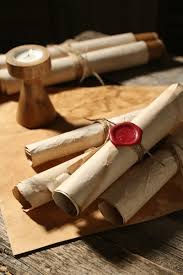

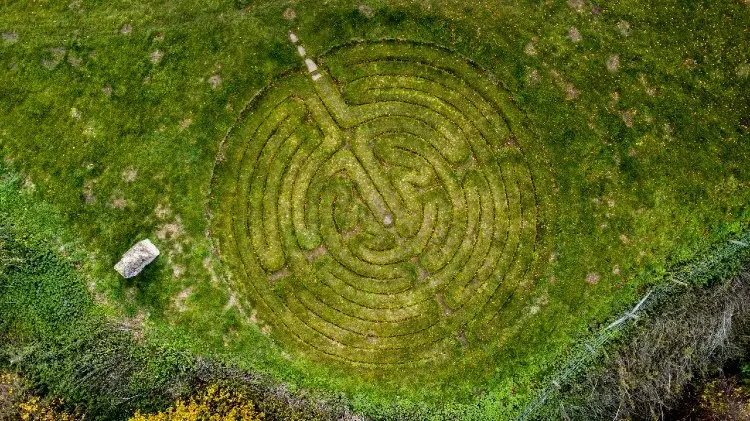
Comments