
The Black Bear and the Bear with the Label

Updated: Aug 20

There are moments in this work when the archive arrives first as a sign: a painted animal above a bookseller's door, a title-page surviving from a broken century, a name at the bottom of an imprint, a churchyard where printers gathered, a stone church where civic memory was kept, or—centuries later—a small bear at a railway station with a label around his neck.
Each belongs to a different historical setting. What brings them together here is a question of custody: how stories, bodies, names, and vulnerable things are carried when the original vessel changes or disappears.
The Black Bear and the Printed Stage
In early modern London, shops were identified by signs before street numbering became standard. Readers went to the Black Bear, the White Swan, the Mermaid, the Crown, the Angel, the Bible, or the Sun. The city was navigated through images.
The Black Bear is first of all a documented book-trade sign in Paul’s Churchyard, and the surviving imprints now give it a longer literary custody history than this scroll originally carried.
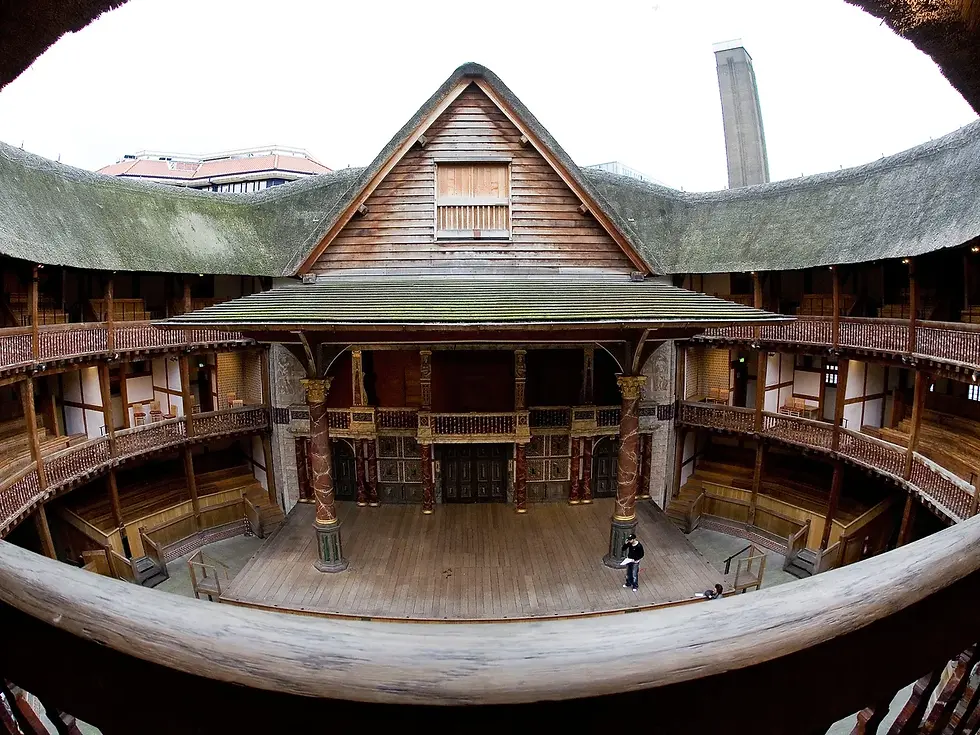
The wider Shakespeare print world gathered playwrights, printers, booksellers, stationers, rights-holders, churchyards, guilds, courts, and readers into one system of preservation. A play could leave the stage and become a portable body of text. That body required keepers.
Robert Allot’s connection is exact: Shakespeare’s 1632 Second Folio was printed by Thomas Cotes for Allot and sold at his shop at the sign of the Black Bear in Paul’s Churchyard. The bear therefore belongs to a named edition, bookseller and place rather than to a vague “folio story.”
Before Shakespeare: Marlowe at the Black Bear
The sign was carrying literary bodies decades earlier. A 1598 edition of Christopher Marlowe’s Hero and Leander, completed by George Chapman, was printed by Felix Kingston for Paul Linley and sold in Paul’s Churchyard at the sign of the Black Bear.
That edition is itself an act of custody: Marlowe had died in 1593 with the poem unfinished; Chapman supplied the continuation and the printed book carried the dead writer forward through another hand.
Edward Blount supplies a second station in the same history. He published Marlowe’s unfinished portion in 1598, and a 1622 edition of Marlowe and Chapman was printed for Blount and sold at his shop at the sign of the Black Bear.
The historical claim should stay precise. These imprints show the Black Bear sign recurring in the custody of Marlowe/Chapman and later Shakespeare in print. They do not require one secret literary institution or an unbroken ownership line between every bookseller.
The proper register is symbolic recurrence resting beside documented book history.
The discovery need not say, “This was made for you.”
It only says, “Look carefully.”
The Gentle Craft at St Bride's
The second printed witness is Thomas Deloney's The Gentle Craft.
Its title-page belongs openly to the world of shoemakers, worthy deeds, hospitality, wit, mirth, and the dignity of trade. One line carries particular symbolic force in this project: the proverbial idea that a shoemaker's son may be prince-born.
The line belongs first to popular craft literature. Yet Deloney's shoemaker repeatedly carries themes that matter here: humble service, disguise, saint-memory, civic rise, and the maker whose work becomes a moral language.
A 1648 edition names John Stafford and St Bride's Churchyard in its imprint. That brings the book into one of London's great printer-and-stationer landscapes, close to the Fleet Street world shaped by generations of English print culture.
The pattern is beautifully self-reflexive: a book about craft survives through another craft—paper, type, ink, selling, cataloguing, and reading.
Its date also matters as historical atmosphere. In 1648 England stood inside civil fracture and the approaching trial and execution of Charles I. The visible crown was under extraordinary pressure while an old popular story about hidden dignity in humble craft was being reprinted.
That juxtaposition is symbolic, not a code claim. It is a charged moment of custody.
Allot, Stafford, and the Open Trade Route
Between the Black Bear and the St Bride's imprint stands a research lead involving Robert Allot and John Stafford. Material suggesting that books were entered or held in trust for Stafford may provide a trade connection, but that route still requires documentary testing.
If the carrier holds, the sequence becomes historically stronger:
Black Bear → Allot → Stafford → St Bride's → The Gentle Craft.
Until then it remains a working hypothesis beside an already meaningful symbolic alignment.
The important idea is not bloodline but custody.
Slaney by the Stone, Stafford by the Print
Stephen Slaney enters this chamber quietly.
At St Swithin, London Stone, his civic memory belongs to parish, office, burial, fire, rebuilding, loss, and the difficult survival of stone memory. At St Bride's, Deloney's craft-memory survives through another mechanism: edition, imprint, catalogue, copy, and reader.
One field keeps the body-memory.
The other carries the words.
Slaney stands by the stone.
Stafford stands beneath the print.
London holds both.
This is one of the deeper themes of the scroll: how memory survives when its first container fails.
Stone can move. Churches can burn. Tombs can vanish. Crowns can fall. Stages can close. But print travels. A play becomes a folio. A craft tale survives another edition. A shop-sign remains in the record after the shop itself has disappeared.
Shakespeare survives through custodians of print.
Deloney survives through Stafford's imprint.
Slaney survives through civic and parish memory.
The city keeps changing the vessel.
The Bear with the Label
Much later, another bear arrives in London.
Paddington belongs to a different century and a different literary world. He has no historical role in the Black Bear book trade, Deloney's publication, or Stafford's imprint.
Symbolically, however, he changes the bear-chamber in a useful way.
The Black Bear is public sign, trade emblem, and literary custody.
Paddington is the bear made vulnerable: the traveller, stranger, displaced child-figure, and guest who arrives carrying little more than a suitcase, memory, manners, and a request to be cared for.
Please look after this bear.
The sentence turns custody into a moral test. What kind of city receives the stranger at its threshold? Does it pass him by, reduce him to inconvenience, or recognise dignity beneath comic innocence?
That question belongs naturally beside The Gentle Craft. Deloney's shoemaker carries hidden dignity beneath humble work. Paddington carries hidden dignity beneath apparent smallness and displacement.
Both ask whether nobility can be recognised where no crown is visible.
London's Test of Custody
The symbolic movement is therefore from guardianship to care.
The Black Bear asks: Who keeps the printed body?
Paddington asks: Who looks after the vulnerable one?
Both are questions of custody.
Between them stands London: a city that printed kings, buried aldermen, staged rebellion, sold craft-myths, preserved Shakespeare, and later received a small fictional bear wearing a label.
The connection does not need to be historical to be meaningful. Its proper home is symbolic recurrence, held beside the secure histories of print, parish, trade, and literature.
The bear guarded the printed stage.
The poster carried the hidden prince.
Slaney stood by the stone.
Stafford held the craft in print.
Paddington asked the city for mercy.
The old questions of kingship, craft, memory, and witness were staged, printed, buried, carried, labelled—and left waiting for another reader.

Comments