
Lincoln Before the Knowing — Tennyson and the Public Arthur

Updated: 5 days ago
Tennyson, the Ivesons, the Talbots, and the Return of the Public Arthur

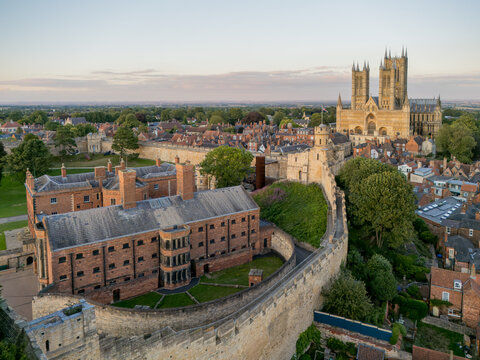
Some places are researched before they are visited. Lincoln was not. I moved here first. That distinction has become one of the quiet laws of The Gentle Third Craft. Family before interpretation. The Humber before the historical map. South Ferriby before the old water routes. Bear Beat before the symbolic bear. And Lincoln before I understood what Lincoln was going to become inside the investigation.
I moved to the city in February 2025. At that point I had not moved here because of Thomas Lany. I had not come because of Alfred Tennyson. I had not connected the cathedral, Great Tom, the castle, Arthur, the Grail, the Talbots, the Brownlows or the strange Holderness legal current that would later lead through a family called Iveson.
Lincoln was simply where life had brought me. Only afterwards did the city begin to answer. That is what makes this a place-before-knowing story. The ground came first. The recognition came later.
The Man in the Morning Chapel
One of the first doors was Thomas Lany. Inside Lincoln Cathedral, in the Morning Chapel, the name entered my investigation not as a theory but as a person attached to a real institution. Thomas Lany belonged to the cathedral. He held ecclesiastical office. He became precentor. And he was buried within the cathedral itself. The significance of that role becomes clearer when we remember what a precentor actually does.
A precentor belongs to ordered sound. Liturgy. Music. Timing. The coordination of voices inside sacred space. Thomas Lany therefore entered the work through a combination that was already familiar elsewhere: name, office, sound, body, building, memory. His body remained inside the institution whose sound he had once helped order. I had already moved to Lincoln before knowing any of that.
That sequence matters to me. Residence first. Recognition later. The city had become part of my life before the archive made it part of the story.
Then the City Began to Sound
Once Thomas Lany had opened the cathedral chamber, another Tom was already waiting above it. Great Tom of Lincoln. Great Tom is a bell. That sounds obvious, but the simplicity is exactly what makes it useful. Because Great Tom demonstrates something this whole investigation has encountered repeatedly: a name can survive a change of body.
An earlier Great Tom was cast in the seventeenth century. Later the bell was recast. The metal changed. The object changed. Yet the public identity survived. It was still Great Tom. The old body was not secretly identical to the new one. Continuity did not require pretending there had been no replacement. The continuity was carried by name, function, institution and human recognition.
That is almost a perfect model for the wider Craft. Bodies change. Books are copied. Family names disappear through daughters and return later. Buildings are rebuilt. Offices pass to successors. Stories acquire new authors. A bell can be physically remade and remain socially itself. And the bell only becomes fully itself when somebody rings it.
Material custody still requires people. Then the name Thomas doubled again. Thomas Lany below. Great Tom above. Not the same thing. Not one code. Two different carriers occupying the same cathedral landscape. One human. One bronze. One dead. One repeatedly given voice. Lincoln had already begun teaching the method.
The Public Arthur
Then Alfred Tennyson entered. Tennyson matters to this project for a very different reason. He did not discover Arthur. He did something almost as important. He made Arthur public again. Arthur had survived through medieval chronicles, romances, manuscripts, Malory, cheap print, antiquarian recovery and changing forms of popular culture. But Tennyson gave the king an enormous Victorian body.
Morte d'Arthur returned the Passing of Arthur to nineteenth-century poetry. Then Idylls of the King expanded the material into a far larger cycle. Arthur. Guinevere. Lancelot. The Grail. Fellowship. Failure. The wound in the kingdom. The collapse of the ideal. The king's departure. Tennyson did not simply reproduce Malory. He recast Arthur for his own age.
Just as Great Tom could change bronze while retaining identity, Arthur could change literary body while remaining Arthur. That matters enormously. Because if an old story is going to survive for centuries, it cannot remain frozen. Every age has to receive it. Translate it. Cut it differently. Give it another voice. Tennyson was one of the great receivers.
He took Arthur out of the specialist manuscript room and helped place him in Victorian homes, schools, public culture, illustration, recitation and eventually monument. Arthur became nationally legible again. The medieval king had acquired a modern public body.
The Queen Reads the King
The royal reception matters too. Tennyson's Arthurian work entered the world of Queen Victoria and Prince Albert. Albert admired Tennyson's writing. The royal household received his work as living Victorian literature rather than as an antiquarian curiosity. After Albert's death, Tennyson's Arthurian world remained entangled with royal mourning and memory. This is an extraordinary stage in the long life of Arthur.
The old British king had moved through medieval history and romance, through Malory and print, and now into the reading world of the nineteenth-century British monarchy. That creates something historically important: reception. A reigning royal household was reading the reconstructed national king. Arthur did not need to be biologically present in the family for the story to enter the palace.
Story itself is a carrier. And Tennyson had become one of its great custodians.
Tennyson Was Not Only a Poetic Return
This is where the later research changed the picture. For a long time Tennyson sat in the project primarily as the Lincolnshire poet who returned Arthur to Victorian Britain. Then the Iveson records opened. And suddenly Tennyson was not only literary. There was a human bridge. In 1767, George Tennyson — Alfred Tennyson's grandfather — was apprenticed to William Iveson of Hedon, gentleman and attorney.
George was the son of Michael Tennyson of Preston in Holderness. He later entered the legal profession himself. This is not symbolic resemblance. It is an ordinary eighteenth-century master-and-apprentice relationship. George Tennyson. William Iveson. Hedon. Holderness. Law. And that changed everything about how the later Iveson material had to be read.
The Iveson Dynasty
The Ivesons were not a stray family. They formed a legal dynasty in Hedon. Solicitors. Town clerks. Stewards. Court officers. Men involved with land, manors, property, Paull and the wider Holderness administrative landscape. The family continued across generations. And much later, inside that same legal dynasty, another name appears. Arthur Percival Iveson. Arthur. Percival. Two names that sit directly inside the Arthurian and Grail story-world.
That by itself cannot tell us why his parents chose them. Arthur was already a repeated Iveson family name. The origin of Percival remains the sharper question. But the context had changed. Arthur Percival was not floating in a random Victorian directory. He belonged to a legal family whose older representative had directly trained Alfred Tennyson's grandfather.
The name could no longer be treated as though there were no human route at all between the Iveson family and the Tennyson family. There was. A real one. More than a century earlier.
Hedon Returns to Lincoln
Look at the geography. George Tennyson begins in the Holderness world. He is apprenticed at Hedon. The Ivesons belong to Hedon's long legal and municipal environment. Their professional reach touches Hull and Paull. Then George Tennyson's family continues into Lincolnshire. His grandson Alfred is born in Lincolnshire. Alfred becomes the great Victorian poet of Arthur.
And now, in Lincoln, the poet himself is monumentalised. The movement is remarkable: Holderness → Hedon → Iveson → George Tennyson → Lincolnshire → Alfred Tennyson → Arthur → Lincoln. It is not one secret route. It is a human history. Training. Family. Profession. Migration. Literature. Public memory. And in my own life, the direction almost reverses.
Hull childhood. Humber. Lincolnshire. Then Lincoln. The same broad eastern country keeps changing function.
The Monument Was Meant to Speak
The Lincoln Tennyson memorial opened a much larger chamber than the old version of this scroll allowed. George Frederic Watts made the monument, but it emerged from a real human programme of commemoration. In 1898, with Earl Brownlow chairing the Lincolnshire memorial effort, the proposed form shifted from stained glass to a bronze statue. Watts became the sculptor. Poetry was being given a body.
That distinction matters because the finished object is not simply a likeness of Alfred Tennyson. It is an arrangement of selected things: the poet, a flower held in his hand, his dog beside him, and inscriptions taken from his own writing. The memorial therefore tells us how Tennyson was being remembered. It turns literature into material architecture.
The Flower in the Crannied Wall
One face of the monument carries Tennyson's tiny poem usually known as Flower in the Crannied Wall, while the statue itself places the flower in his hand. The poem begins with a fragment pulled from a wall and held 'root and all.' Tennyson then makes an enormous intellectual leap: if he could truly understand that little flower — root and all, and all in all — he says he would understand what God and man are.
This is not merely botanical decoration. The poem is about method. A tiny surviving thing is taken seriously enough to be followed down to its root; the root opens the question of the whole; and the whole opens the human and divine mystery. Fragment → root → whole. That is remarkably close to the working method that later developed inside The Gentle Third Craft: a name, a stone, a line in a deed, a damaged monument or a local memory becomes meaningful when its roots and relationships are reconstructed rather than when the fragment is treated as an isolated curiosity.
There is another human hand in this detail. After George Frederic Watts died, Mary Seton Watts designed and modelled the flower for Tennyson's hand in October 1904. So the symbol was not only quoted in bronze; somebody physically remade the poem as an object. Tennyson's written flower became Mary's modelled flower, then the bronze flower held by the public statue. Text became handwork. Handwork became memory.
Arthur and Merlin Are Literally on the Monument
The opposite inscription changes the monument again. It takes a line directly from Tennyson's The Holy Grail: 'over all one statue in the mould / of Arthur made by Merlin.' Arthur and Merlin are therefore not associations added to this memorial by our later research. Their names are physically written into the finished Tennyson monument.
And the line is unusually apt. Lincoln is looking at a statue of Tennyson while the plaque describes a statue of Arthur made by Merlin. Tennyson had spent his career remaking Arthur in language; the memorial makers then commemorate Tennyson through language about Merlin making Arthur into an image. Poet makes king. Merlin makes king. Sculptor makes poet. One act of making sits inside another.
What the Arthur Passage Actually Means
The source passage in The Holy Grail is richer than the two lines carved on the Lincoln memorial. Tennyson describes Merlin's statue of Arthur crowned and winged, oriented toward the east and the Northern Star. At sunrise the golden parts blaze so that people far away can see the image and cry that they still have a king. The whole passage is about kingship made visible across distance: an image carrying recognition when the living king is not physically present.
Only the short Arthur-and-Merlin portion is carved on the Lincoln plinth; the Northern Star, eastward orientation, sunrise and distant people's cry belong to the surrounding poem, not to the inscription itself. But that source context is still important because somebody chose those particular Arthur-and-Merlin words from a passage whose governing idea is public recognition through a crafted image.
That makes the Lincoln memorial a particularly powerful reception object for this project. The poet who gave Victorian Britain a new public Arthur is himself turned into a public statue, and that statue is labelled with Tennyson's own words about Merlin making a statue of Arthur. This is not a hidden code. It is more interesting because it is public. The memorial openly places Tennyson, Arthur, Merlin, image-making and remembrance in the same physical object.
Then Talbot Walks into Lincoln
The human chain around that object is just as striking. Adelbert Wellington Brownlow Cust, 3rd Earl Brownlow, chaired the memorial movement and helped carry it into material form. County, Crown, government and art meet in him. His wife was Lady Adelaide Chetwynd-Talbot, daughter of Henry John Chetwynd-Talbot, 18th Earl of Shrewsbury. In July 1905, Lady Adelaide unveiled the completed Tennyson memorial.
That matters because Adelaide had already participated in the custody of Talbot family memory, including the restoration history surrounding John Talbot, 1st Earl of Shrewsbury. Decades later the same woman publicly unveils a monument to the poet who remade Arthur for Victorian Britain. The sequence is not an abstract surname coincidence. It is a real woman moving between acts of memorial care: ancestral Talbot memory in one generation of her life, Tennyson's public memory in another.
The Dog Beside the Poet
And the monument still refuses to become purely grand. At Tennyson's feet stands his dog, Karenina. The national poet, the flower that asks what God and man are, and the Arthur-and-Merlin inscription all share space with an animal companion. The domestic and the monumental are deliberately allowed to coexist.
Seen whole, the memorial carries four extraordinary public elements at once: Tennyson's own likeness; the flower and its root-to-whole poem; Karenina beside him; and a direct quotation from The Holy Grail naming Arthur and Merlin. The remaining historical question is who selected each element and how the final programme was agreed. But their coexistence on the finished monument is already material fact. Lincoln did not merely erect a statue to a poet. It built a small architecture of how that poet was to be remembered.
Why This Changes the Scroll
This is why the monument belongs near the centre of the Lincoln story rather than at its edge. The Flower in the Crannied Wall gives us the method of the fragment and the root. The Holy Grail plaque gives us Arthur and Merlin explicitly. The source passage gives us the idea of an absent king kept visible through a made image. Brownlow and Adelaide give the object named human custodians. Watts and Mary Watts give it makers. Karenina gives it intimacy. The result is a memorial in which craft, remembrance, Arthurian literature, family patronage and public identity all occupy one physical place.
And I had moved to Lincoln before I knew any of it was there.
Tennyson's Arthur Was Allowed to Fail
One of the reasons Tennyson belongs so deeply in this project is that his Arthur is not preserved through easy triumph. Camelot fails. The fellowship breaks. Relationships fracture. The kingdom becomes wounded. The dream cannot survive unchanged. That is essential. The oldest mistake would be to imagine custody as perfect preservation. It almost never is.
What survives is usually damaged. Edited. Recast. Divided. Translated. Misremembered. Rebuilt. The important question is whether anything meaningful crosses the rupture. Tennyson understood this. His Arthurian world is full of ideal and failure existing together. The Round Table can be broken. The king can depart. The public dream can collapse. Yet the story survives the collapse.
That is why Arthur keeps returning.
25 October
Tennyson enters my personal chronology through another unexpected door too. I was born on 25 October. That date already carries several independent historical memories inside this project. St Crispin's Day. Agincourt. The death of King Stephen in 1154. Other Humber and religious calendar associations. And on 25 October 1854, the Charge of the Light Brigade took place during the Crimean War.
Tennyson turned that disastrous cavalry charge into one of the best-known poems of the Victorian age. The date places Tennyson on a calendar that had already become strangely crowded in my own research. A poet of Arthur. A poet of national memory. A poet whose famous war poem also returns to the date of my birth.
A man whose monument stands in the city I moved to before understanding any of this.
The City Before the Knowing
The most important fact remains the simplest. I already lived here. I did not discover the Brownlow papers and then decide Lincoln was meaningful. I did not discover the Iveson apprenticeship and move closer to Tennyson. I did not find Thomas Lany in a database and relocate to the cathedral city. I moved. Then I encountered Lany.
Then the cathedral opened. Then Great Tom became meaningful. Then Tennyson became more than a statue. Then Arthur widened. Then the Iveson bridge appeared. Then Brownlow appeared. Then Adelaide Talbot appeared. The order cannot be reversed. Lincoln → life → encounter → research → return. Lincoln was home first. Archive second.
From Hedon to Lincoln
If I had to reduce the entire scroll to one route, it would be this: William Iveson of Hedon trains George Tennyson. George's family continues into Lincolnshire. His grandson becomes Alfred, Lord Tennyson. Tennyson remakes Arthur and the Grail. The work enters Victorian national and royal culture. Brownlow commissions Watts. Lady Adelaide Chetwynd-Talbot unveils the Lincoln memorial.
And more than a century later, I move to Lincoln before discovering the chain. None of these things needs to be one secret design. Their value lies in being separately real. A solicitor trains another solicitor. A family produces a poet. A poet remakes a king. A royal household reads the poet. An aristocrat commissions a monument.
A Talbot unveils it. A later resident encounters the city. Then the archive begins to reveal how many carriers were already present.
The Public Arthur Returns Home
There is something satisfying about Arthur returning to Lincoln through Tennyson. Lincoln already had kings. Battles. Castle. Cathedral. Saints. Bells. Burials. Royal conflict. But Tennyson gives the city another king. A literary one. Not seated in the castle. Carried in language. Tennyson's Arthur had travelled farther than any medieval army. Through books. Schools. Families. Royal households.
Illustrations. Performance. Memory. By the time the poet himself becomes a statue in Lincoln, Arthur has already passed through him into millions of readers. The poet becomes fixed. The story keeps travelling.
The Bell, the Man and the King
So now I sometimes imagine three different forms of custody occupying the same Lincoln field. Thomas Lany. A human life turned into institutional memory. Great Tom. A public name surviving material recasting. Tennyson. A human writer who recasts an older king into another literary age. Body. Bell. Book. Three different vessels. Three different kinds of continuation.
And behind them, Arthur. Changing again. Chronicle Arthur. Romance Arthur. Malory's Arthur. Tennyson's Arthur. White's Arthur. The king survives because the vessel changes.
Lincoln After the Knowing
I still live in Lincoln. That makes this current different from most of the others. Alkborough is somewhere I return to. Arran was a journey. London Stone was a destination. Moreton Corbet was visited. The Humber was lived beside. But Lincoln is now the place from which much of the work has been assembled. The archive is being reconstructed inside the same city that eventually became one of its major subjects.
At first I moved into Lincoln without understanding the current. Now I live inside a landscape whose layers I can no longer entirely unsee. The cathedral is still a cathedral. The bell is still a bell. The monument is still a monument. But each now has more than one clock. The historical clock. The reception clock.
And my own.
The City Was Already There
The city did not appear because I discovered it. Thomas Lany had already lived and died. Great Tom had already been recast. Tennyson had already remade Arthur. George Tennyson had already been apprenticed to William Iveson. Victoria and Albert had already received Tennyson's work. Brownlow had already commissioned the monument. Adelaide Talbot had already unveiled it.
The histories existed independently of me. What changed was recognition. And perhaps that is what a place-before-knowing really is. A place already full of history before the person develops the eyes to see it. I came to Lincoln first. Then Lincoln began to unfold.


Comments