
Robert’s Spider Web

Updated: Aug 20
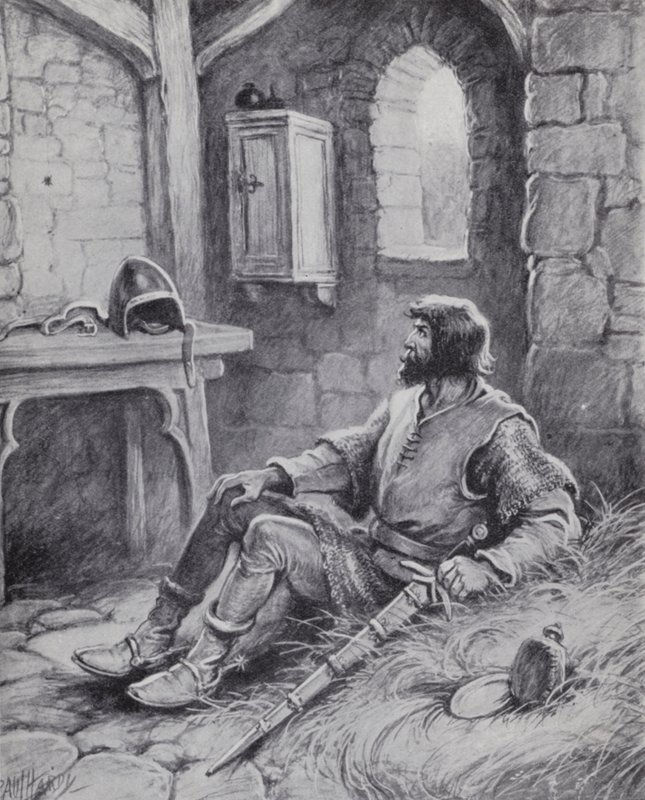
The cave had already opened.
In the first scroll, the path began not in Scotland, but in Alkborough:
in a wound on a tree that seemed to form the mouth of a cave, with marks beside it that appeared to whisper toward Arran.
That carving was not proof. It was not a charter, not a deed, not a medieval witness. But it became a door.
The door led to King’s Cave.
And King’s Cave led to Robert the Bruce.
The broken king.
The hidden king.
The king who had to learn that return was not an act of will alone, but a web.
The spider story is often told simply: Bruce sees the spider fail, try again, fail again, and finally succeed. He learns persistence. He rises. He returns. He wins.
But the deeper lesson is not only persistence.
The deeper lesson is structure.
A spider does not survive by courage alone.
It survives by thread.
By anchor.
By relation.
By knowing where to fasten each line so that what is fragile alone becomes strong together.
That is what Bruce needed.
Not merely a sword.
A web.
And one of the strongest strands in that web was Thomas Randolph.
Randolph brings us to Morton Castle.
Morton is not the cave.
It is the castle beside the cave-story.
It gives the spider web a stone body.
If Arran gives us the chamber of hidden kingship, Morton gives us the land-body of one of the men who helped Bruce’s kingdom hold.
Thomas Randolph was not just one of Bruce’s captains.
He was kin.
He was Bruce’s nephew through the mother-line.
He was tied to Carrick, Kilconquhar, Fife, MacDuff, Nithsdale, Stichill, Moray and Morton.
He was a commander, prisoner, returned man, capturer of Edinburgh Castle, warrior at Bannockburn, Earl of Moray, and later guardian of the kingdom.
He was one of the living strands of Robert’s spider web.
And to understand him, we must go behind the battlefield.
Behind Bannockburn.
Behind the cave.
Behind the spider.
We must go to the women who carried the web before the men could fight within it.
II. Morton Castle: The Water-Wrapped Witness
Morton Castle stands in Dumfriesshire, above Morton Loch, held in a landscape of water, slope, distance and concealment.
It is not a vast royal fortress in the simple sense.
Its power is stranger than that.
It has the feeling of a place partly withdrawn from the obvious road.
The castle sits on a triangular spur, defended by steep ground and water.
It belongs to the Nithsdale field, the south-western Scottish world of border pressure, older lordship, Bruce struggle and movement between kingdoms.
Morton matters because the barony was in the hands of Sir Thomas Randolph by the end of the thirteenth century, around the period in which the surviving castle may have been raised or reshaped.
This places the Randolph family not only in genealogy, but in land.
A name in a family tree can drift.
A castle fixes it to earth.
Morton becomes the stone witness of Randolph’s world.
Its name also opens another path.
Morton.
Moreton.
Moor-town.
Settlement on the moor.
Stronghold in the moorland field.
The name does not prove one single family origin.
It appears in different places for different reasons.
But in this project, names do not have to prove alone to matter.
They become markers when they sit on real land movements.
Morton Castle belongs to Randolph and Bruce.
Moreton Corbet belongs to Toret, Corbet and William Marshal.
Moreton enters Slaney later through Robert Slaney of Hatton Grange and Anne Moreton, and through the name Moreton Slaney.
These are not the same site.
They are not one proven family-thread.
But the repetition matters because the same kind of landscape keeps appearing: castle, moor, border, transfer, marriage, rebuilding, memory.
Moreton Corbet had already shown one form of the pattern.
In 1216, during the First Barons’ War, William Marshal took Moreton Toret from rebel hands for King John.
Later, through marriage, the Toret current passed into Corbet, and the place became Moreton Corbet.
Then, in the Elizabethan age, Andrew and Robert Corbet rebuilt the castle as Stephen Slaney rose through London merchant and civic power.
Morton Castle now gives the Scottish counterpart.
A castle of the Randolph field.
A castle beside the Bruce web.
A castle whose name echoes the Moreton current already moving toward Slaney.
The scroll does not force these into one bloodline.
It lets the castles stand beside one another.
Morton in Scotland.
Moreton in England.
Both carrying the question of how land remembers.
III. Thomas Randolph: The Nephew in the Web
Thomas Randolph, later Earl of Moray, stands at the centre of this extension.
He is often remembered through Bruce’s war: captured, restored, trusted, raised, and placed at the centre of the struggle.
He is one of the men who turns the spider lesson from parable into action.
Randolph captured Edinburgh Castle in 1314, scaling its rock by night through daring, knowledge and timing.
That act alone shows the nature of the man. He did not merely fight in open field.
He understood hidden approaches.
He understood the shape of stone.
He understood how a fortress could be taken not by weight, but by path.
Then came Bannockburn.
At Bannockburn, Bruce needed more than loyalty.
He needed command.
He needed men who could hold formation, read ground, and prevent the English army from becoming the full force it appeared to be on paper.
Randolph was one of those men.
He becomes one of the strands through which the web tightens.
But Randolph is not only important because of what he did.
He is important because of who he was.
He was Bruce’s nephew through the mother-line.
That changes everything.
He was not simply a useful noble commander.
He was family, but not through the obvious male Bruce line.
He came through a more hidden route: Marjory of Carrick, Adam of Kilconquhar, and their daughter, whose name moves uncertainly through the records as Martha, Isabel, or Isabel-Martha.
That hidden daughter became Thomas Randolph’s mother.
So Randolph’s relationship to Bruce came through Marjory’s first marriage.
This is the deep web.
Bruce and Randolph were not only joined by war.
They were joined by a woman before the war began.
IV. Marjory of Carrick: The Spider-Mother
Marjory, Countess of Carrick, is one of the great hidden figures behind the Bruce story.
She is often introduced as Robert the Bruce’s mother. That is true, but it is not enough.
She was Countess of Carrick in her own right.
She carried land, title, inheritance and legitimacy.
Her body and estate became a crossing-point through which two crucial lines entered the web.
First, she married Adam of Kilconquhar.
From that marriage came a daughter: Martha, Isabel, Isabel-Martha, or simply the daughter of Adam and Marjory, depending on the source and tradition.
The name is uncertain. Her function is not.
That daughter became the mother of Thomas Randolph.
Then Marjory married Robert de Brus, Lord of Annandale.
From that marriage came Robert the Bruce.
So Marjory stands behind both men.
One son becomes king.
One grandson becomes the king’s nephew, commander, Earl of Moray and regent.
The web is not built after the cave.
It is already inside the mother-line.
That is why Marjory matters so profoundly.
She is not a background noblewoman. She is the womb of the web. Through her, Carrick enters Bruce.
Through her first marriage, Kilconquhar enters Randolph.
Through her second marriage, Annandale and Bruce enter kingship.
The spider story teaches Bruce to see the web.
But Marjory had already woven it.
This is the feminine pattern we keep meeting across the whole work.
Countess Lucy carries the older Lincolnshire land-current.
Gruoch carries the Moray kingship hinge.
Nicholaa de la Haye holds Lincoln Castle by courage and office.
Margaret de Quincy carries Lincoln, Bolingbroke, Chester, de Lacy and Marshal inheritance.
Marjory of Carrick carries Bruce and Randolph in one hidden web.
The women are not decorative.
They are the transfer system.
The men fight in the field because the women have already carried the land, title, blood and claim across generations.
V. Adam of Kilconquhar: Fife, MacDuff and Acre
Adam of Kilconquhar is one of the hidden doors of the Bruce web.
He is not famous like Bruce. He is not remembered like Wallace.
He is not carved into national memory like the spider.
But once the web is seen, Adam becomes unavoidable.
He appears to belong to the Fife and MacDuff world.
That matters deeply.
The MacDuff name carries old Scottish legitimacy.
It belongs to the ancient right of Fife connected with the inauguration of kings.
It is not only a family.
It is a ritual memory of kingship.
Through Adam of Kilconquhar, that Fife/MacDuff current enters the mother-line of Thomas Randolph.
Then, in Bruce’s own story, another MacDuff figure appears:
Isabella MacDuff, Countess of Buchan.
She is remembered for helping to crown Bruce at Scone, asserting the old Fife right when the kingdom was fractured and dangerous.
Her act was not symbolic in a soft sense.
It was politically explosive.
She helped make Bruce king in the language of old Scottish legitimacy.
So the Fife/MacDuff current touches the web twice.
Through Adam, it helps create Randolph.
Through Isabella, it helps crown Bruce.
That is not coincidence in the structure of the story.
It is the same legitimacy-current appearing in two forms: blood and rite.
Then comes Acre.
Adam of Kilconquhar died at Acre while on crusade.
This must be handled carefully.
There is no proof that Adam was a Templar.
There is no proof that he belonged to the Order.
But Acre itself was one of the great crusader cities of the eastern Mediterranean world, filled with the presence of military orders, pilgrims, merchants, nobles, ships, fortifications, oaths and holy war.
To say Adam died at Acre is not to make him a Templar.
It is to place Bruce’s wider family-web inside the Holy Land atmosphere before the Templar collapse.
That matters because the later scroll has already shown how the Temple breaks across the island:
Jacques de Molay in France,
William de la More in England,
Scottish Temple charters at East Cowton, and Bannockburn in the same charged year.
Adam belongs earlier.
He is not the fall of the Temple.
He is the crusader prelude inside Bruce’s mother-web.
Through him the web touches Fife, MacDuff, Kilconquhar, Carrick, Randolph, Bruce and Acre.
A hidden man.
A deep strand.
VI. The Hidden Daughter: Martha, Isabel and the Half-Sister Bridge
The daughter of Marjory and Adam is one of the most important uncertain figures in the whole web.
Her name moves.
Some traditions call her Martha.
Others Isabel.
Others Isabel-Martha.
Some sources avoid certainty and identify her by relationship rather than name:
daughter of Marjory of Carrick and Adam of Kilconquhar.
The name matters, but the function matters more.
She was Bruce’s half-sister through Marjory.
She became Thomas Randolph’s mother.
Through her, Randolph became Bruce’s blood-nephew.
That is the bridge.
It is quiet, almost hidden, but it changes the way Randolph must be read.
He is not simply Bruce’s captain. He is not merely one nobleman among many.
He belongs to the family-web that made Bruce’s return possible.
This hidden daughter carries three currents:
Carrick from Marjory.
Kilconquhar and Fife/MacDuff from Adam.
Bruce kinship through her half-brother Robert.
Then she passes that whole web into Thomas Randolph.
That makes Randolph a living knot.
His father brings Stichill, Roxburgh, Nithsdale, royal office and the Randolph/Ranulf name-root.
His mother brings Carrick, Kilconquhar, Fife, MacDuff and Bruce blood.
His own life brings Morton Castle, the Moray title, Edinburgh Castle, Bannockburn and the regency of Scotland.
This is why Randolph stands so strongly beside Bruce.
The cave shows the king alone.
The web shows he was never alone.
VII. Ranulf, Randolph and the Name Beneath the Name
The name Randolph carries its own older echo.
Behind Randolph stands Randulf. Ranulf. Ralph.
The name-world of Norman and Anglo-Norman lordship, border families, Chester, Lincoln and Scotland.
In Thomas Randolph’s own family, the surname appears to descend from an earlier Randulf or Ranulf figure.
So before Thomas is Earl of Moray, before he becomes the commander at Bruce’s side, before Morton Castle enters the scroll, the Ranulf-name is already beneath him.
This matters because Ranulf is not only a personal name in this project.
It is a repeating signal.
Ranulf de Gernon had already appeared in the older Lincolnshire/Chester field.
Ranulf de Blondeville later carries the Chester current into Lincoln.
Through Hawise of Chester and Margaret de Quincy, the Ranulf/Chester/Lincoln line moves into de Lacy and Marshal.
The name does not make all these people one family.
But it shows the kind of world Randolph belongs to:
a world where names, offices, castles, earldoms and border power keep crossing from England to Scotland and back again.
Randolph’s father, Sir Thomas Randolph of Stichill, belongs to this border-administrative world.
Stichill lies in Roxburghshire, in the pressure-zone of Scotland and England.
He is associated with Nithsdale and with high office in Scotland.
His world is not only sword-world.
It is also chamber, office, finance, land and royal trust.
So Thomas Randolph inherits two great systems.
From his father: border office, Nithsdale land, the Ranulf/Randolph name.
From his mother: Carrick, Kilconquhar, MacDuff/Fife and Bruce blood.
That is why the later title matters so much.
Bruce makes Randolph Earl of Moray.
Moray is not a random reward.
In the larger scroll, Moray has already carried Macbeth, Gruoch, Lulach, Óengus, Freskin, de Moravia, Andrew Moray and Wallace.
To place Randolph into the Moray title is to bind him to the old northern chamber of kingship, rebellion, planting and return.
Randolph becomes the man where many names meet.
Ranulf beneath Randolph.
Carrick behind Bruce.
MacDuff behind legitimacy.
Moray as title.
Morton as castle.
The web tightens.
VIII. Shakespeare’s Question: Macbeth, Macduff and the Parable of the Web
Shakespeare must be handled carefully here.
He is not evidence in the same way a charter is evidence.
He is not a castle record, a land grant, a genealogy, or a witness to eleventh-century Moray.
His play does not prove the Bruce-Randolph web.
But neither should he be dismissed.
Because once the pattern is seen, Shakespeare begins to appear in this project not as a simple recorder of fact, but as a re-shaper of national memory.
In Macbeth, the old Moray king is transformed into the dark image of unlawful ambition.
The historical Macbeth, tied to Moray, kingship, battle and a long reign, becomes the haunted murderer of the stage.
The older northern power is turned into warning.
The regional king becomes the cursed usurper.
But beside him stands Macduff.
In the play, Macduff is the correcting force.
He exposes false kingship.
He carries grief into justice.
He helps restore the broken realm.
He is tied to Fife.
He becomes the answer to Macbeth’s distorted crown.
In the historical web behind Bruce, the Fife/MacDuff current appears again — not as theatre, but as legitimacy.
Adam of Kilconquhar appears to belong to the Fife/MacDuff world.
Through Adam and Marjory came the hidden daughter who became Thomas Randolph’s mother.
Through her, Randolph became Bruce’s blood-nephew.
Then Isabella MacDuff, Countess of Buchan, helped crown Bruce at Scone, asserting the old Fife right connected with Scottish inauguration.
So the Shakespearean pattern becomes strangely suggestive.
In the play, Macduff corrects Macbeth.
In Bruce’s story, MacDuff/Fife helps validate the returning king.
In Randolph’s story, Kilconquhar/Fife helps create one of Bruce’s strongest strands.
This should not be forced into proof.
It is better understood as parable.
Shakespeare may not be preserving a hidden genealogy.
But his play dramatises a deep national wound:
Moray kingship darkened, Fife correction rising, false rule challenged, and the realm restored through a bloodline that survives beyond apparent ruin.
That is why Macbeth belongs near this scroll.
The cave taught Bruce to see the web.
But the play shows another truth:
a kingdom can be rewritten after the fact.
A king can be turned into a monster.
A woman of power can be turned into a shadow.
A lineage can be purified or condemned depending on who is telling the story.
This project has met Shakespeare before:
Crispin and Henry V, Julius Caesar and the Julius Gate, Macbeth and Macduff, the question of broken kingship, national memory and rightful return.
A pattern is emerging.
Not proof of conspiracy.
A pattern of theme.
Shakespeare keeps appearing where the project touches succession, oath, hidden lineage, false kingship, national myth and the rewriting of history.
That deserves its own scroll.
For now, the point is simple.
Shakespeare’s Macbeth does not prove the web.
It shows how webs are later turned into stories.
IX. Chester, Montfort, Margaret and the Wider Web
The Bruce web is not only Scottish.
It crosses England, Normandy, France, Chester, Lincoln, Fife, Carrick, de Lacy, Marshal, de Clare and St Clair.
This is where Margaret de Quincy, Countess of Lincoln, opens another chamber.
Margaret was a great female holder of land and title.
She inherited Lincoln and Bolingbroke through her mother Hawise of Chester.
Her husband John de Lacy became Earl of Lincoln through her right.
Later, Margaret married Walter Marshal, son of William Marshal.
That marriage produced no children, so it is not a bloodline into Marshal through issue, but it is still a title, dower and alliance bridge between Lincoln/de Lacy and Marshal/Pembroke.
Behind Margaret stands the Chester web.
Hawise of Chester was daughter of Hugh de Kevelioc, Earl of Chester, and Bertrade de Montfort of Évreux.
That matters deeply.
Hugh de Kevelioc carries the Chester/Ranulf current.
His father was Ranulf de Gernon.
The Chester line had power in England, Wales and the Norman world.
Bertrade de Montfort pulls the family into the Montfort/Évreux and continental French sphere, close to royal kinship.
Their children carry the web outward.
Hawise carries Chester into Lincoln and Margaret de Quincy.
Maud of Chester marries David of Scotland, Earl of Huntingdon.
Through David of Huntingdon’s descendants come the great Scottish succession claims: Bruce, Balliol and Hastings all descend from that Huntingdon line.
So the Chester-Montfort family-field touches both sides of the later Scottish crisis.
This is enormous.
The same wider family world sends one current into Lincoln, de Lacy and Marshal, and another into the Scottish succession dispute that leads toward Bruce, Balliol, Edward I, Wallace, Randolph and Bannockburn.
Then de Clare enters the field.
Bruce’s wider ancestry touches de Clare and Marshal through the Annandale line.
At Bannockburn, a later Gilbert de Clare dies fighting on Edward’s side.
His death breaks open the de Clare inheritance, and one current eventually strengthens the Stafford line.
At the same battle, St Clair survives on Bruce’s side and later moves into the Rosslyn memory-field.
St Clair and de Clare are not one proven family.
But at Bannockburn they become mirror-names.
St Clair survives into chapel-memory.
de Clare dies into inheritance-power.
The web is not simple.
It crosses itself.
It sends cousins against cousins, names against echoes, claims against claims.
Bruce is not standing outside the Anglo-Norman world.
He is born within it, fights against part of it, draws support from another part of it, and reshapes Scotland through a web that includes Gaelic, Norman, French, Fife, Carrick, Annandale, Moray and border strands.
That is why the spider image works.
Bruce’s web was not one nation against another in a clean line.
It was kinship under pressure.
X. Countesses and the Female Custody Line
The deeper this work goes, the clearer the feminine pattern becomes.
The men are often remembered because they fight.
But the women carry the web.
Countess Lucy carries the older Lincolnshire land-current:
Bolingbroke, Spalding, Chester, Lincolnshire inheritance and the land-body beneath later power.
Gruoch carries the Moray kingship hinge:
not merely Lady Macbeth, not merely temptation, but dynastic legitimacy, feud repair, and the old northern claim.
Nicholaa de la Haye holds Lincoln Castle: not symbolically only, but literally, with office, keys, defence and courage.
Margaret de Quincy carries Lincoln, Bolingbroke, Chester, de Lacy and Marshal:
title, inheritance, alliance and estate-power moving through a countess.
Marjory of Carrick carries Bruce and Randolph:
one marriage giving the hidden daughter who mothers Thomas Randolph, another marriage giving Robert the Bruce.
Isabella MacDuff carries inauguration: the old Fife right brought into Bruce’s crowning.
These women are not footnotes.
They are the architecture.
The story keeps repeating the same truth: land and legitimacy often move through women, even when chronicles place men at the centre of the page.
A countess holds more than a title.
She holds memory.
She holds the right through which a man becomes earl.
She holds the claim through which a son becomes king.
She holds the marriage through which a castle changes name.
She holds the blood through which a commander becomes nephew, not servant.
That is why Marjory belongs at the heart of Robert’s spider web.
She is the hidden centre.
Without Marjory, Randolph is not Bruce’s blood-nephew.
Without Randolph, Bruce loses one of the strongest strands in the web.
Without the women, the web collapses into a list of battles.
And this work is not only about battles.
It is about custody.
XI. Morton, Moreton and the Slaney Echo
The Morton name now turns the scroll back toward the wider project.
Morton Castle belongs to Thomas Randolph and the Bruce web.
Moreton Corbet belongs to the English castle-current: Toret, Corbet, William Marshal, rebellion, marriage-transfer and Elizabethan rebuilding.
Later, Moreton enters Slaney directly through Robert Slaney of Hatton Grange and Anne Moreton.
Their line preserves the name Moreton Slaney.
This does not prove that Morton Castle and Moreton Corbet are one family origin.
It does not prove that the Randolphs and the Slaneys are one bloodline.
But it does create a field of resonance that must be kept open:
Morton — Randolph — Bruce — Moray.
Moreton — Toret — Corbet — Marshal.
Moreton — Slaney — Hatton Grange — later family memory.
The name returns in the places where the story is already active.
And the timing becomes suggestive.
Andrew and Robert Corbet are rebuilding Moreton Corbet in the Elizabethan age, while Stephen Slaney rises through the London Skinners, Merchant Adventurers and civic office, and while Bowes and Moyser are moving former Templar-Hospitaller land at Temple Cowton.
Again, not proof of one secret line.
A custody-pattern.
Old castle lands.
Old sacred lands.
Legal transfers.
Merchant power.
Border memory.
Humber return.
Morton Castle gives the Scottish chamber.
Moreton Corbet gives the English castle chamber.
Moreton Slaney gives the family after-echo.
The name keeps returning beside the web.
XII. Robert’s Spider Web
The spider story is usually told as a lesson for one man.
But Robert’s web was never only Robert’s.
It was Marjory’s web.
It was Carrick’s web.
Kilconquhar’s web.
MacDuff’s web.
Fife’s web.
Randolph’s web.
Morton’s web.
Moray’s web.
Chester’s web.
Lincoln’s web.
Marshal’s web.
St Clair’s web.
de Clare’s broken web.
The Temple’s paper web.
The cave’s hidden web.
Bruce did not rise because he simply tried again.
He rose because the strands held.
Some were blood-strands.
Some were land-strands.
Some were women’s inheritance-strands.
Some were crusader-strands.
Some were border-office strands.
Some were castle-strands.
Some were memory-strands.
The cave gave the image.
The spider gave the lesson.
But the web had already been woven through generations.
Marjory of Carrick placed Bruce and Randolph in relation before the war began.
Adam of Kilconquhar brought Fife and Acre into the hidden chamber.
The daughter called Martha or Isabel carried the half-sister bridge.
Thomas Randolph became the nephew in arms. Morton Castle gave him stone.
Moray gave him title. Bannockburn gave him field. Scotland gave him memory.
Then Shakespeare, centuries later, showed how memory can be remade: Macbeth darkened, Macduff corrected, kingship rewritten for a new age.
That is why this extension belongs beside The Cave of the King.
The first scroll opened the cave.
This scroll shows the web behind it.
And the final lesson is not certainty.
It is pattern.
The cave did not save Bruce alone.
The spider did not crown him alone.
The battle was not won by one man alone.
A kingdom returned because the web held.
And when the web is followed backward, it does not lead first to a sword.
It leads to a countess.


Comments