
The Julius Gate

Updated: Aug 20
Before Julian's Bower became one of the great landscape forms in this work, Julius was already present in the paternal record.

That is the Julius Gate.
It begins not with a king or antiquarian theory, but with a German-born farm servant settling in East Yorkshire.
His name later stands beside other names that became important to the project—Patrick Augustus, Julius August, Arthur Cecil, and, in the landscape, Julian's Bower.
The documentary family remains the foundation. The name-pattern comes afterward.
Two Paternal Gates
Much of the early ancestry work moved through the Slaney line carried by my grandmother Edna Slaney.
That route opened Hull, Nottinghamshire, Staffordshire, Stephen Slaney, Elizabethan civic office, Alkborough, Humber fishery, and the wider land-and-custody enquiry.
Then another paternal door opened through my father's father's line:
Conman.
Behind George Stanley Conman and Arthur Cecil Conman stood Julius Conman, born in Germany and settled in East Yorkshire.
The paternal history therefore contains two different currents:
Slaney — an English family route whose documentary history eventually reaches London, land, Alkborough, and the Humber.
Conman — a German-origin family whose earliest secure English generations belong to labour, marriage, rural East Yorkshire, and a surname whose earlier continental form remains unresolved.
They meet later in the family.
That meeting is genealogical fact. The older meanings behind each current remain the work of the archive.
The Beverley Marriage Record
The first hard gate is the marriage record.
On 17 December 1864, at the Register Office in the Beverley district, Julius Conman married Margaret Gibson.
Julius was recorded as twenty-six, a bachelor and farm servant, resident at Newbald. Margaret was nineteen, a spinster and domestic servant, also resident at Newbald.
Her father was William Gibson, agricultural labourer.
Julius named his father as:
Patrick Augustus Conman — farmer.
That name opened the gate behind Julius.
Patrick Augustus remains unresolved in his own continental or English record. He is therefore one of the most important active genealogical targets in the whole Conman enquiry.
The naming field is already notable:
Patrick Augustus.
Julius.
Julius August.
Arthur Cecil.
The first three create an unmistakable classical-name current inside the family record. The origin and purpose of those choices remain open.
Arthur Cecil raises a separate and later question whose documentary mechanism must be pursued on its own terms.
Newbald: The English Threshold
Julius first appears in the marriage record not as a Hull merchant or urban craftsman, but inside the rural East Riding.
Newbald places him among farms, roads, servants, villages, churches, and the wider Beverley-Cottingham landscape.
His English life therefore begins through work and marriage.
That matters to the human story. The foreign origin is not preserved in grandeur; it enters through ordinary labour.
A German-born man becomes part of an East Yorkshire household because he works, marries, has children, and remains.
The pattern is migration before mythology.
Dinah Ann and Skidby Ings
A baptismal record in 1865 for Dinah Ann, daughter of Julius and Margaret Conman, places the family at Skidby Ings and records Julius as a labourer.
The place-name matters in its own right. Ings belongs to the northern vocabulary of low-lying meadow and water-shaped ground.
The project has repeatedly encountered that kind of landscape:
Humber,
Ancholme,
carr,
ing,
drain,
well,
marsh-edge,
ferry.
Here the water-language is not symbolic invention. It is embedded in the address where the family actually lived.
Julius enters East Yorkshire in wet ground.
Skidby Carr: The Household Appears
The census then gives the family a fuller body.
At Skidby Carr, Julius appears as a married labourer born in Germany, with Margaret and children including Dinah Ann, Albert, and Julius August.
The record changes Julius from isolated foreign-born ancestor into a household:
German father,
Yorkshire mother,
East Yorkshire children,
work,
school,
family relations,
carr-land.
The human scale is important because it protects the later symbolic work from becoming detached from the people themselves.
Julius was a man supporting a family in a rural landscape before he became a “gate” in a book.
Dunswell: Cottage, Garden, Drain, and Road
The Dunswell material gives Julius one of his most vivid physical settings.
A later researcher, Keith Graham, noticed the Conman family close to his own Graham ancestors in the 1881 census. The two households were near neighbours in what was then a small rural community, making acquaintance plausible even though the exact relationship remains to be documented.
An 1887 York Herald property advertisement sharpens the scene further. It describes a dwelling-house with sheds, outbuildings, and a large fruit-tree garden on the road from Dunswell to Cottingham, separated from adjoining property by the Barmston Drain, and occupied by Julius—printed there as Couman.
Now the ancestor can be placed almost bodily:
a cottage,
a garden,
fruit trees,
outbuildings,
a road,
a drain,
a neighbouring rural community.
That is far more valuable than leaving “Germany” as an abstraction.
The Surname That Would Not Settle
The Couman spelling is also an archival clue.
It may be no more than printer or clerk error. But because Julius was German-born, every early variant deserves to be preserved until the original continental surname is found.
Search forms remain open rather than established equivalents:
Conman,
Couman,
Conmann,
Coneman,
Koenemann / Könemann,
Konnemann,
and other phonetic or Anglicised possibilities.
The goal is not to choose the most poetic spelling. It is to find Julius's baptism, household, migration route, or other German record under the form he actually used before England.
The surname is therefore a documentary problem before it is a symbolic one.
Margaret Gibson: The Local Anchor
Margaret Gibson deserves her own place in the scroll.
She is not merely the English wife attached to a migrant ancestor. Through her family, Julius enters a local agricultural network and becomes rooted in East Yorkshire.
Her father William Gibson was an agricultural labourer, and Gibson relations appear in the surrounding family field.
Julius brings the foreign root.
Margaret provides the local household in which that root becomes inheritance.
This is another instance of a pattern already important to the project: women frequently carry continuity not because mythology has assigned them that role, but because marriage, property, kinship, children, and household records make them actual historical carriers.
Julius Before Arthur Cecil
The next generation gives the enquiry one of its most important name questions:
Arthur Cecil Conman.
The reason for that name is unresolved.
It should remain unresolved until the documentary carrier is found—family connection, baptismal sponsorship, kinship, friendship, employer, theatrical influence, inherited naming tradition, or another mechanism.
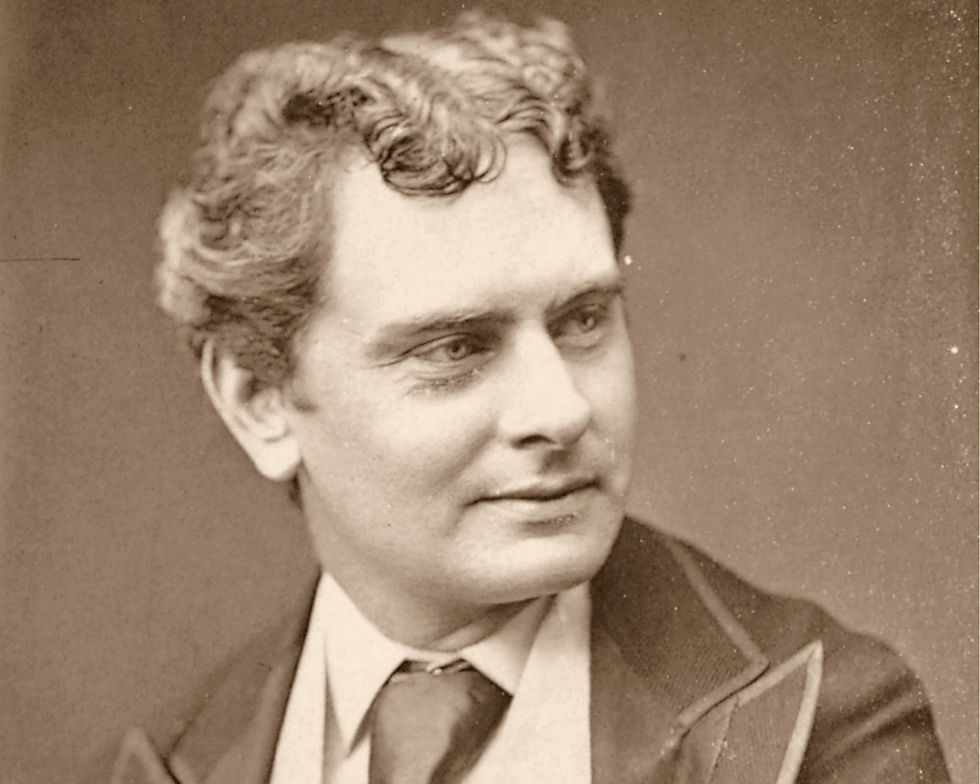
That matters because Arthur Cecil Blunt, the actor known professionally as Arthur Cecil, belongs to a separate nineteenth-century research programme already close to the Conman question. The recurrence is too specific to be explained away in advance, but it must be tested through records rather than assumed.
So the sequence is worth holding exactly:
Patrick Augustus.
Julius.
Julius August.
Arthur Cecil.
The names are real family data.
What they carried is still being investigated.
Julian's Bower and the Name Recurrence
Only after the genealogy is secure should Julian's Bower enter.
The Alkborough turf maze had already become central through place, walking, St John, Kell Well, Humber, Countess Close, and the woodland field.
Then Julius returned to attention.
Julius and Julian belong to the same broad classical name-family, but that linguistic relationship says nothing about who named the maze or why.
The value here is symbolic recurrence:
a Julius in the paternal bloodline;
a Julian in the landscape reached through the Slaney/Humber enquiry.
They do not prove one another.
They rhyme.
And this project has learned to let a rhyme generate a question without turning it into evidence.
The Maze as Method
Julian's Bower matters more deeply than the name echo because of its form.
A unicursal maze refuses the shortcut. It reaches the centre through turning, return, and patience.
That is also how the genealogy has had to be worked.
Julius did not yield his German family by one straight search.
The trail moved through marriage certificate, baptism, census, occupation, newspaper advertisement, Dunswell, surname variants, and later the specific Heidelberg birthplace.
The maze therefore becomes a good image for the method:
follow the carrier,
accept the turn,
return when necessary,
do not jump the hedge simply because the centre can be seen.
Heidelberg: The German Gate Sharpens
Later records sharpened Julius's German origin to Heidelberg.
That matters genealogically first. It transforms “Germany” from a huge search field into a city and surrounding regional archive.
Heidelberg also carries a major historical Palatine and Stuart-Hanoverian past, explored elsewhere in the Watch-Word scroll. That history gives the birthplace a powerful recurrence field, but it does not establish a royal relationship for Julius.
The next real step remains documentary:
find Julius in the Heidelberg-area records;
find Patrick Augustus;
identify the original surname form;
find the migration mechanism.
The symbolic field can wait for the genealogy to answer.
Cerdic as an Older British Mirror
Cerdic belongs here only as symbolic deep background.
The traditional founder of Wessex stands at the difficult boundary between Brittonic and Germanic worlds. His historicity and the formation of the early Wessex tradition are complex, and his name has long generated debate because it appears Brittonic in form within an Anglo-Saxon founding narrative.
For this scroll, that makes Cerdic useful as a mirror of mixture rather than as an ancestor.
Britain was repeatedly made through arrival, settlement, intermarriage, language change, and inherited land rather than through untouched purity.
Julius offers a much later family-scale version of a universal migration process:
a man arrives from the continent;
marries locally;
works the land;
raises children;
his surname changes in English mouths and records;
his descendants become part of the place.
That is the comparison. Nothing more needs to be forced onto it.
The Double Current
The paternal field can now be seen cleanly.
Conman gives the German-origin route: Julius, Patrick Augustus, Heidelberg, uncertain surname form, Margaret Gibson, Skidby, Dunswell, Arthur Cecil.
Slaney gives the separate English route: Edna, the Humber, Stephen Slaney, Alkborough, land, fishery, civic office, and the older questions beyond him.
The two genealogies meet in the modern family.
The landscape later brought their symbolic registers into conversation at Alkborough.
That is enough.
There is no need to crown the convergence.
The value lies in recognising that two genuinely different family histories arrived in one descendant before that descendant knew either archive.
Keeper Lines
Julius enters the English record through labour, marriage, and wet East Yorkshire ground.
Patrick Augustus remains the father-gate behind him.
Margaret Gibson turns arrival into household and inheritance.
Skidby Ings and Skidby Carr give the family water-shaped ground.
Dunswell gives Julius a cottage, garden, road, drain, and neighbouring community.
Couman warns that the surname may have changed in transmission.
Heidelberg gives the German search a real geographical gate.
Arthur Cecil gives the next naming mystery and a documentary question that must remain open until its carrier is found.
Julian's Bower gives the symbolic rhyme and, more importantly, the method: turn patiently toward the centre without cutting across the evidence.
Before the maze became a symbol, Julius was already in the family record.
That is the Julius Gate.

Comments