
The Gospel of Thomas: Hidden Sayings and the Living Archive

Updated: Aug 20
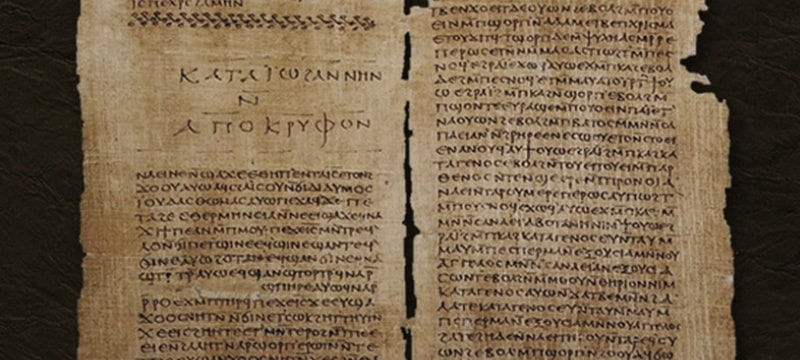
Some texts do not ask to be believed. They ask to be recognised.
Discovered in 1945 near Nag Hammadi in Egypt, the Gospel of Thomas is a collection of 114 sayings attributed to Jesus. It contains no continuous narrative of miracles, crucifixion, or resurrection; instead it presents direct, often cryptic sayings of the teacher.
The text places unusual weight on direct knowing and recognition. The kingdom is not simply somewhere else waiting to arrive. It is described as present, spread across the earth and hidden in plain sight from those who have not learned to see.
The opening saying sets the tone:
“Let him who seeks continue seeking until he finds. When he finds, he will become troubled. When he becomes troubled, he will be astonished, and he will reign over the all.”
Another saying used at the opening of this work reads:
“Recognise what is in your sight, and that which is hidden from you will become plain to you.”
For this project, these sayings function less as abstract slogans than as instructions for looking.
Wood, Stone, and Direct Seeing
The surviving Gospel of Thomas belongs to the early Christian centuries, while debate continues around the age of individual sayings and their relationship to other Jesus traditions. Its voice is distinctive because it offers little institutional structure. The reader repeatedly encounters an immediate demand to seek, recognise, and know.
Logion 77 is especially striking:
“Split a piece of wood; I am there. Lift up the stone, and you will find me there.”
Logion 3 likewise turns attention inward and outward at once:
“The kingdom is inside of you, and it is outside of you. When you come to know yourselves, then you will become known, and you will realise that it is you who are the sons of the living father.”
The movement is toward the immediate and material: wood, stone, earth, the human heart.
The Gospel That Walks Beside This Story
From the beginning, the Gospel of Thomas has been woven into this work as both epigraph and method. It is not merely decoration. It offers a discipline of recognition.
The name Thomas also recurs across the wider field: Thomas the Apostle, Thomas Slaney, Thomas Deloney, Thomas Dekker, Thomas Lany, Thomas Malory, Thomas Swan, and Thomas Stephen. Each belongs to a different historical register, yet within the recurrence field each stands near questions of doubt, craft, witness, testing, or making.
The canonical memory of “Doubting Thomas” gives the apostle a particular relevance. In this project he becomes the honest tester: the one who refuses second-hand certainty and asks to touch the wound. The important quality is not cynicism but reverent inquiry.
That same discipline guides the Greater Bridge.
The carvings in the Alkborough wood are marks in living oak—names, eyes, hearts, figures, the cave-like inset marked “ARRAN,” the man with the bag heading toward the triangular well, and angular strokes read in the field as a JD signature. They belong first to the category their evidence can bear: physical marks encountered in a living landscape.
“Split a piece of wood; I am there.”
Within the symbolic register, the land becomes a living archive. The well, the maze, the old names—Slaney, Deloney, Lany, de la Haye, Malet, de Molay—gather into a field that asks to be examined without being forced.
That is the discipline this story requires: look deeply, but do not violate. Notice the field, but do not possess it. Record what happened, and let the strength of the evidence determine the strength of the claim.
Thomas the Tester
Thomas the Tester and Peeping Tom offer two different models of seeing. One tests by approaching the wound honestly; the other becomes the figure of illicit looking. The contrast belongs naturally beside a gospel that repeatedly asks what it means to see.
The third craft is not leather or silk. It is sound, attention, memory, and pattern. Bear Beat is not placed on top of the mystery as a separate project; within the living relay it becomes a modern expression of the same discipline:
rhythm as orientation,
music as signal,
the maker returning when the world has forgotten how to listen.
The Gospel of Thomas does not establish the historical bridge. Its role here is methodological and symbolic: it teaches how the bridge might be walked.
Split the wood. Lift the stone. Recognise what is in your sight.
In the living oak of Alkborough, the wood has already been split.
The relay continues.


Comments