
Second Troy: Aeneas, Brutus, Joseph, and the Western Island

Updated: Aug 20

Before Britain became Arthur's island, medieval writers imagined it as a receiver: a western land capable of inheriting stories that began elsewhere.
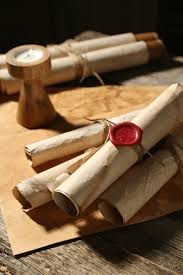
This scroll asks what language the medieval world used to explain why Britain could be imagined as chosen, haunted, guarded, and unfinished.
Four patterns carry the answer:
Aeneas — the survivor carrying sacred memory out of a burning city.
Brutus — the legendary Trojan founder who gives Britain a second beginning.
Joseph of Arimathea — the Grail receiver whose tradition is later drawn westward toward Britain.
Perceval — the seeker who sees the sign but fails to ask the healing question.
Together they form a mythic architecture above the older land.
Aeneas: The Sacred Carrier
The pattern begins with catastrophe.
Troy burns. Aeneas leaves carrying his father Anchises, leading or protecting his son Ascanius, and preserving the household gods of the defeated city.
The image compresses the whole problem of transmission:
Anchises — ancestral memory.
Ascanius — the future.
The household gods — sacred continuity.
Troy — the wound that makes carrying necessary.
Aeneas does not preserve the old world by keeping it intact. He preserves what can be carried through its destruction.
That is the first law of this scroll: sacred memory survives catastrophe by changing vessel.
Carthage: The Beautiful Almost-Answer
Aeneas's encounter with Dido and Carthage matters because the city offers something genuine: welcome, love, order, and the possibility that wandering might stop.
Carthage is not evil, and Dido is not a false woman placed in the hero's way. She is herself a wounded founder building after loss.
Yet for Aeneas, Carthage is not the end of the road.
This creates a useful seeker-pattern. The path toward meaning is rarely a clean movement from darkness to truth. It can pass through near-answers—places that heal part of the wound without becoming the final home.
Within the modern field, that distinction matters. Alkborough, Corbet Wood, Hawkstone, Lincoln, Arran, and other charged places need not all perform the same function. Some may be resting places, some documentary hinges, some wound-sites, some doors.
The work becomes stronger when it asks what kind of place it has encountered rather than forcing every place to be the centre.
Rome: Exile Enters Older Ground
Aeneas eventually reaches Italy, where Trojan exile enters an already inhabited and contested landscape. The future emerges through struggle, alliance, marriage, and fusion rather than through simple replacement.
That pattern provides a useful analogy for Britain's layered history.
Roman, British, Anglo-Saxon, Danish, Norman, Christian, monastic, Arthurian, and later antiquarian worlds do not arrive on empty ground. Each enters landscapes already carrying memory.
The old layer may be suppressed, reinterpreted, renamed, or absorbed, but it rarely disappears cleanly.
The land is repeatedly re-clothed.
Brutus: Britain as Second Troy
Geoffrey of Monmouth makes the decisive British move in the Historia regum Britanniae. His Brutus, descended in legendary genealogy from Aeneas, travels west and becomes the founder of Britain.
This is not modern history or archaeology. It is a mythic charter: a story giving Britain a prestigious Trojan beginning.
The sequence becomes:
Troy falls.
Aeneas carries the line west into Italy.
Rome emerges from the Trojan exile tradition.
Brutus carries the Trojan story farther west.
Britain becomes a second Troy.
The island is therefore imagined not merely as remote, but as a western receiver of an eastern catastrophe.
The Giants Beneath Britain
Geoffrey's Britain is not empty when Brutus arrives. Giants already inhabit it.
Within the symbolic register, that detail matters because it acknowledges an older power beneath the new founding story.
The giants should not be identified directly with archaeological peoples such as the Corieltauvi or Cornovii. Yet they perform a comparable mythic function: they say that later kingdoms stand on something older than themselves.
This is where Second Troy meets Before Mercia.
The earlier scroll follows rivers, springs, hillforts, tribal territories, place-memory, and ritual landscapes.
This scroll follows the stories later laid across such land.
The distinction keeps myth from pretending to be archaeology while allowing it to reveal how medieval Britain imagined its own depth.
Joseph and the Western Grail
The Trojan current later meets Christian Grail tradition.
In Robert de Boron's Joseph d'Arimathie, Joseph of Arimathea becomes the receiver and guardian of the vessel associated with Christ's blood. Robert's poem itself belongs to the formative Grail tradition; later continuations and British legends increasingly draw Joseph and the Grail company toward the western island, eventually producing the powerful Glastonbury-Joseph tradition.
The westward pattern can therefore be held carefully:
Aeneas carries sacred memory from fallen Troy.
Brutus carries Trojan founding memory into Britain.
The Grail tradition carries a Christian sacred vessel westward and, in later British reception, into Britain itself.
The parallel is mythic rather than documentary. Its force lies in Britain repeatedly being imagined as a place where something endangered, holy, or unfinished can be received.
The Grail and the Older Vessel
The Grail becomes more than an object. In Robert's Christian retelling it is associated with Christ's blood, survival through death, sacred guardianship, and transmission.
Placed beside older Welsh material, it also resonates with another vessel: the cauldron in the Second Branch of the Mabinogi, associated with Brân and the restoration of slain warriors who return unable to speak.
The Grail need not be declared a direct descendant of Brân's cauldron for the comparison to matter.
The two traditions share a symbolic family:
vessel,
death,
restoration,
blood,
silence,
kingship,
guardianship.
One belongs to medieval Welsh mythic tradition; the other to the Christian Arthurian Grail world. Their resonance helps explain why later Grail literature could feel both Christian and strangely at home in a landscape already rich in vessel stories.
Bron and Brân
Robert's Bron belongs to Joseph's Grail company and later becomes associated with the Fisher King tradition and the guardianship of the vessel.
Beside him, the name Brân creates an irresistible symbolic echo.
Brân carries raven, cauldron, mortal wound, severed head, and protection of Britain.
Bron carries Grail company, fish, table, transmission, and guardianship.
They should remain separate literary figures. The value lies in recurrence, not identity.
Within the symbolic architecture, Brân becomes an older British vessel-king beneath Bron's Christian fisher-keeper: raven beside fish, cauldron beside Grail, buried head beside sacred table, island protection beside the wounded king.
Perceval and the Missed Question
Chrétien de Troyes gives the scroll its moral centre.
Perceval enters the castle of the wounded Fisher King and witnesses the mysterious Grail procession. Because he has been instructed not to ask too many questions, he remains silent. His failure is not lack of sight. He sees the marvel.
He fails to ask what the wounded moment requires.
That is why Perceval matters so deeply to this project.
A sign can be present.
The seeker can recognise that something matters.
And still the encounter can fail if the question is wrong—or never asked.
The old quest therefore becomes an ethical method for approaching modern field sites. Alkborough, Kell Well, Julian's Bower, Fiskerton, Dragonby, Bury Walls, Moreton Corbet, Corbet Wood, and Hawkstone are not being declared literal Grail stations. They are places where the work has learned to ask what kind of wound, memory, record, or recurrence is actually present.
The Wounded Land
The Fisher King's injury affects more than his own body. In the Grail imagination, ruler and land are bound together.
That gives the work a language for landscapes experienced as damaged, abandoned, half-buried, or waiting:
Moreton Corbet — a broken house.
Hawkstone — descent through cave, grotto, and dark passage.
Corbet Wood — bark wounds and name-marks.
Alkborough — maze above the water threshold.
Fiskerton — river-offering memory.
Bury Walls — spring within an ancient enclosure.
The Grail stories do not establish the meaning of these sites. They provide a grammar through which the encounters can be examined:
wound,
vessel,
guardian,
question,
failure,
return,
healing.
The Western Island
The entire movement can now be seen without repeating every stage as a claim.
Troy gives the wound.
Aeneas gives the carrier.
Carthage gives the beautiful almost-answer.
Rome gives the fusion of exile with older ground.
Brutus gives Britain its legendary Trojan charter.
Joseph and the Grail tradition give the sacred vessel a Christian form.
Bron gives guardianship.
Brân gives an older British vessel-echo.
Perceval gives the healing question.
The land remains beneath them all.
That is where Before Mercia and Second Troy finally meet. One follows the ground before the later stories: river, hill, spring, tribe, offering, horn, raven, and wood. The other follows the mythic language that later descended upon Britain: Troy, exile, Grail, vessel, wounded guardian, and healing question.
The relationship need not be expressed as “the land was sacred and the myths proved it.” The more careful conclusion is stronger:
the land carried older histories and sacred associations; later myths gave medieval readers new languages through which such landscapes could be imagined.
The seeker's task is therefore not to force every story onto the place where he stands.
It is to recognise the wound, distinguish the vessel, refuse the false resting-place, carry memory forward, and—when the Grail passes silently through the room—ask the question that heals.


Comments